Broiled Tomato Recipe
This post contains affiliate links. As an Amazon Associate I earn from qualifying purchases.
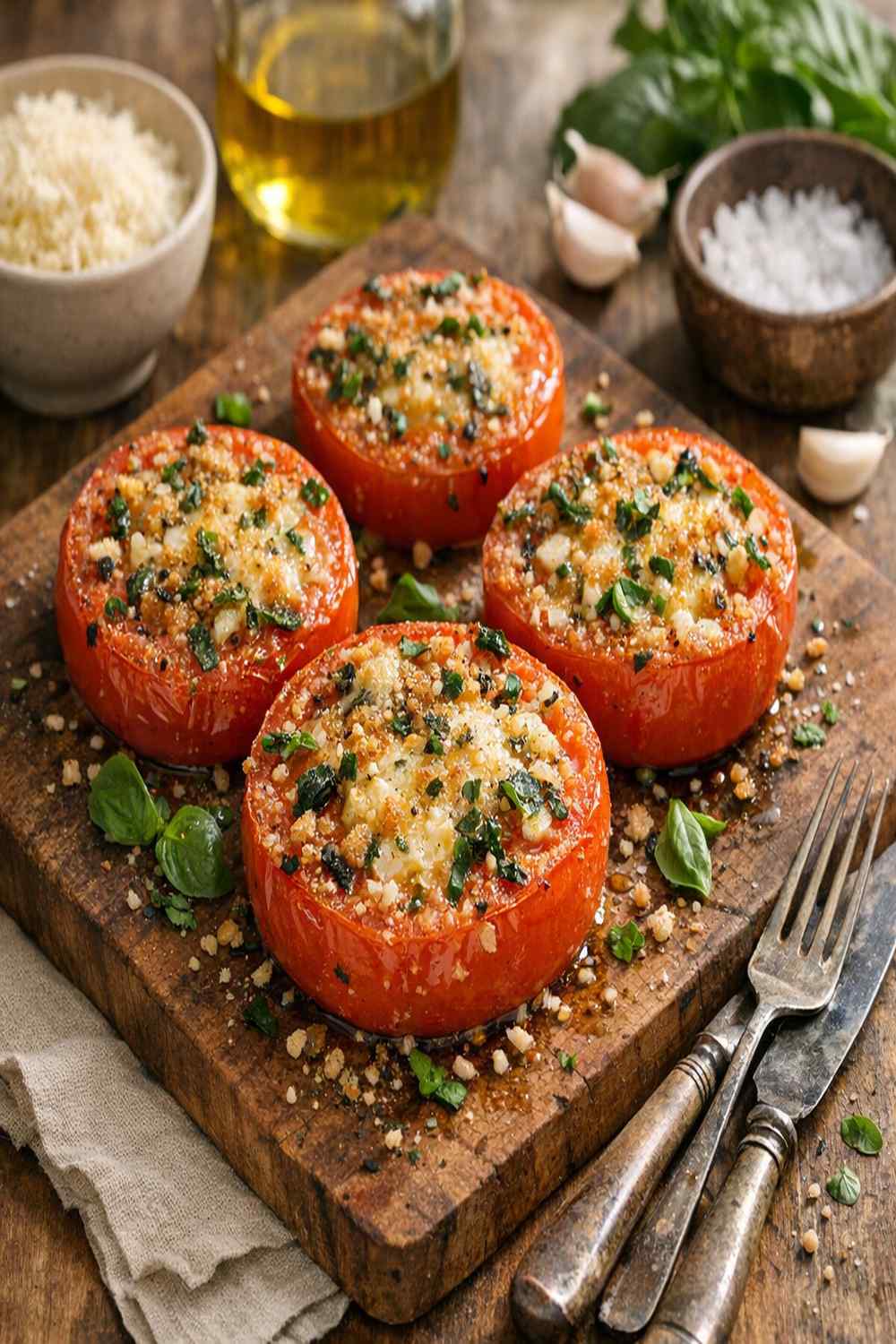
This dish looks and tastes like it costs $40 at a farm-to-table restaurant. The ingredients cost under $10. I’m serious. Golden, bubbling cheese draped over perfectly charred tomatoes with garlic and thyme—it’s the kind of side that makes people ask for your recipe and assume you spent hours in the kitchen. The truth? You’ve got dinner on the table in 15 minutes, and your grocery bill reflects actual money in your pocket, not restaurant markup.
I created this recipe during my early years as a registered dietitian, when I was navigating my own tight budget while working to help families understand that eating well doesn’t require spending recklessly. It became my go-to when I wanted to impress without the stress, and when I needed to prove to my clients that restaurant-quality food happens at home.
The Real Cost Breakdown
Let me walk you through the actual dollars and cents. I’m basing these prices on my local grocery stores here in Norwood, Ohio, where I do my shopping just like you do. Your costs may vary slightly by region and season, but this gives you a realistic picture of what you’re spending per serving.
- Large, firm tomatoes (2) – approximately $2.00 to $3.00 total. I buy mine from Kroger’s produce section when they’re on sale, or I visit a local farmers market in summer where tomatoes are cheaper and fresher. Winter months mean higher prices, so this is where seasonal shopping saves you real money.
- Olive oil spray bottle – $0.30 per use (a standard bottle costs $4 and lasts 15+ recipes). This is where I invest in quality without breaking the bank. One good bottle equals dozens of meals.
- Kosher salt – $0.10 per use (a container costs $2 and lasts for months). Diamond Crystal is my go-to because the crystals dissolve evenly.
- Black pepper (freshly ground) – $0.15 per use (a pepper mill and peppercorns cost $8 total and last a year). Fresh pepper tastes dramatically better than pre-ground.
- Garlic powder – $0.05 per use (a container costs $2 and lasts 6+ months). Store brands at Walmart or Kroger work just as well as name brands.
- Dried thyme – $0.08 per use (a container costs $3 and lasts several months). Check the spice aisle clearance sections—I often find older stock at 50% off with months of shelf life remaining.
- Parmesan cheese, grated (1/2 cup) – $1.50 to $2.00. Buy the wedge from the deli counter and grate it yourself—it’s half the price of pre-shredded, tastes fresher, and melts more smoothly without the anti-caking additives.
Total cost per recipe (serves 4 as a side): approximately $4.50 to $6.00. Cost per serving: $1.15 to $1.50.
A similar dish at a nice restaurant costs $8 to $12 per serving. You’re looking at an 80% savings with better flavor because you controlled every ingredient.
Smart Shopping Tips for This Recipe
- Buy tomatoes at farmers markets in summer and early fall. Prices drop to $0.50 to $1.00 per pound when they’re in season, and the flavor is incomparably better than supermarket tomatoes in January. I plan this recipe during July through September when tomatoes are at their peak cheapness and taste.
- Purchase Parmesan as a wedge, not pre-shredded. Pre-shredded costs $0.60 to $0.80 more per pound and contains cellulose (anti-caking agent) that prevents proper melting. A microplane grater costs $12 once and transforms your cooking forever. The wedge also lasts longer in your fridge—up to 4 weeks wrapped tightly in parchment paper.
- Invest in one quality spice container set and buy spices in bulk from Costco or ethnic markets. Dried thyme, garlic powder, and black pepper account for pennies when you buy in larger quantities. Kroger’s spice section charges premium prices; Indian markets and ethnic stores charge 60% less for the exact same quality.
The Ingredients
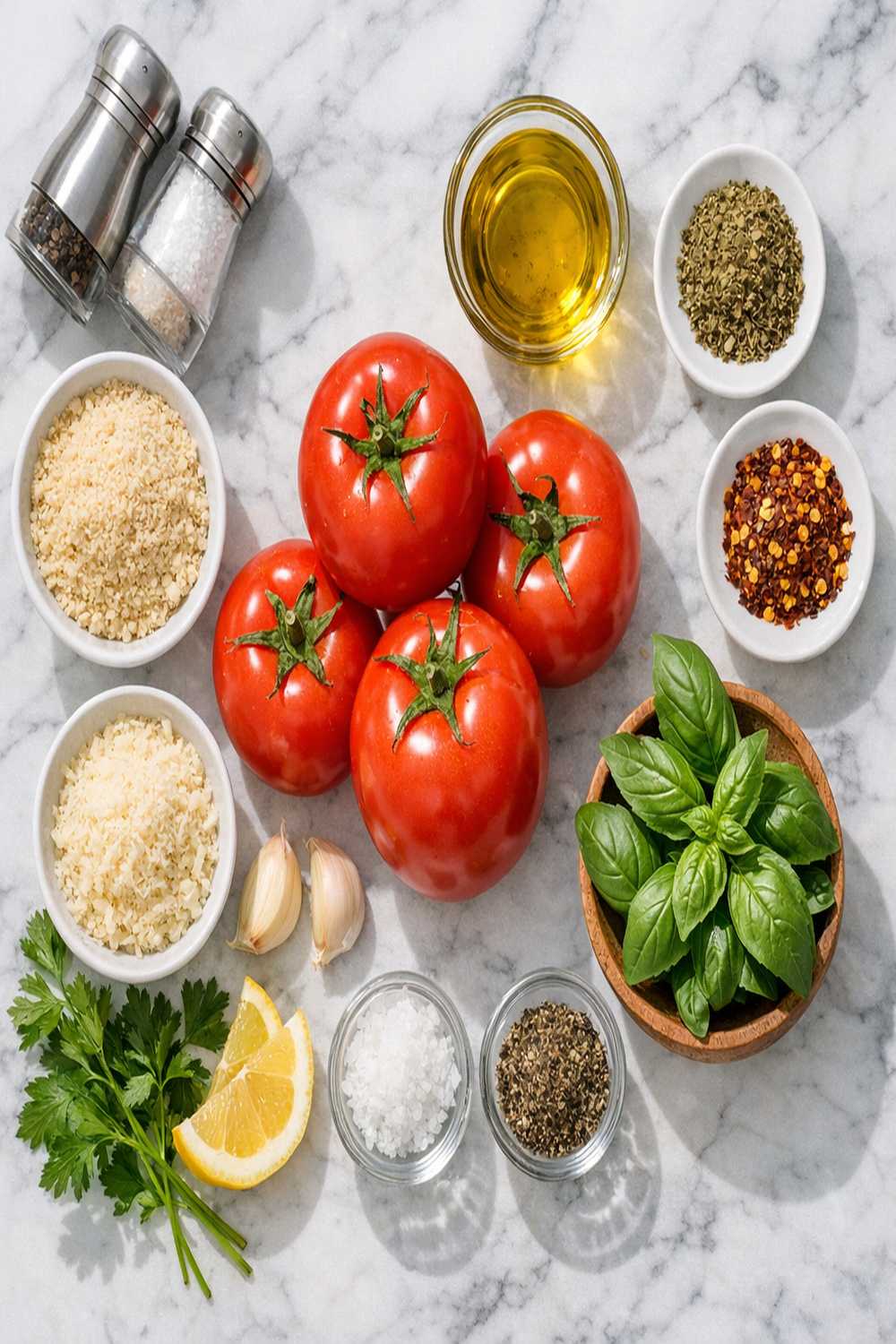
Every ingredient earns its place and its cost. There’s nothing fancy here—just pantry staples that make magic happen under the broiler. These are the flavors my family grew up with at our dinner table, and they’re the ones I recommend to every client who wants to cook with confidence.
- 1/2 teaspoon kosher salt (Diamond Crystal brand crystals dissolve more evenly than table salt)
- 1/2 teaspoon garlic powder (not garlic salt, which doubles your sodium)
- 2 tablespoons fresh basil, torn by hand (optional but transforms the dish; adds $0.50 if you buy one fresh bunch)
- 1/2 teaspoon freshly ground black pepper (coarser grinds add better texture than fine powder)
- olive oil spray (one standard pump bottle, not the aerosol kind which wastes product)
- 2 large, firm tomatoes (Roma or beefsteak varieties work best; avoid soft or overripe tomatoes that will collapse)
- 1/2 cup Parmesan cheese, freshly grated (from a 4-ounce wedge, never pre-shredded)
- 1/2 teaspoon dried thyme (or 1 1/2 teaspoons fresh thyme leaves, stripped from stems)
Makes 4 servings as a side dish (2 halves per person).
How to Make Broiled Tomato Recipe Without Breaking the Bank
Smart cooking isn’t about cutting corners—it’s about understanding what matters. Here, we’re investing in technique and timing instead of expensive ingredients. The result tastes like you spent an hour fussing, when really you spent 15 minutes being intentional.
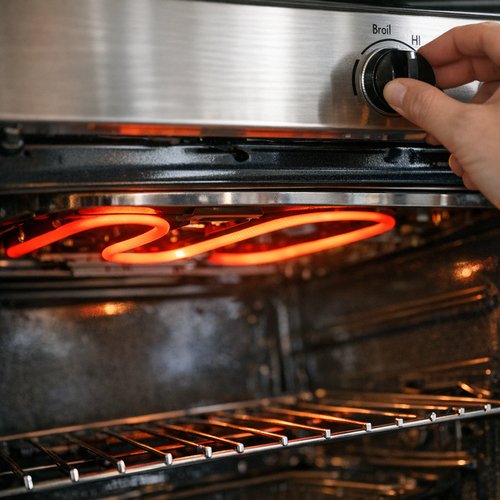
Step 1: Position Your Oven and Preheat the Broiler
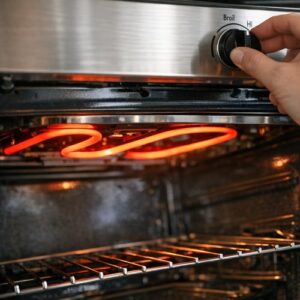
Turn your broiler to high heat (around 500°F). This step is non-negotiable because broilers are all different—some heat up in 2 minutes, others need 5. Give yours a solid 5 minutes to reach full temperature. Position your oven rack so it sits 6 inches below the heating element, not directly underneath. This distance matters tremendously. Too close and your cheese burns black before the tomato interior softens. Too far and everything stays pale and rubbery. If your broiler has a “high” and “low” setting, always choose high for this recipe.
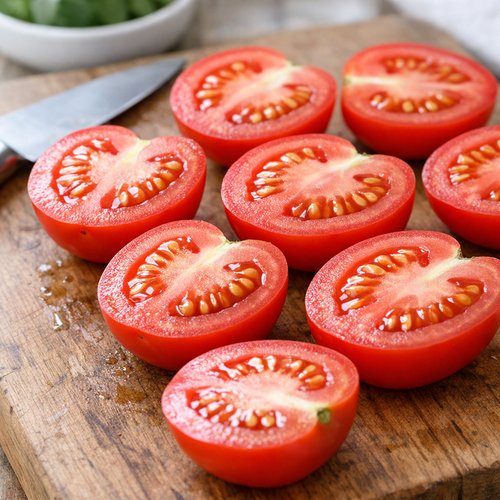
Step 2: Prepare Your Tomatoes for Stability
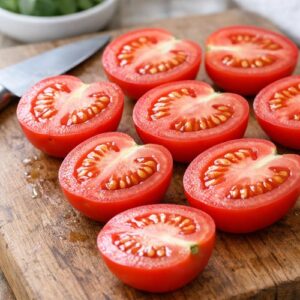
Cut your tomatoes in half lengthwise (from stem to bottom). You’ll have two halves per tomato. Here’s the budget-conscious pro tip that changes everything: slice a paper-thin sliver off the rounded bottom of each half. This creates a flat base so your tomato sits upright on the baking sheet without rolling or tipping. Wasted tomato? Essentially zero—you’re removing maybe 1/8 inch. What you gain is stability and even cooking. Pat the cut sides gently with a paper towel to remove excess moisture. Drier surfaces brown better and accept seasonings more evenly.
Step 3: Oil, Season, and Cheese Your Tomatoes
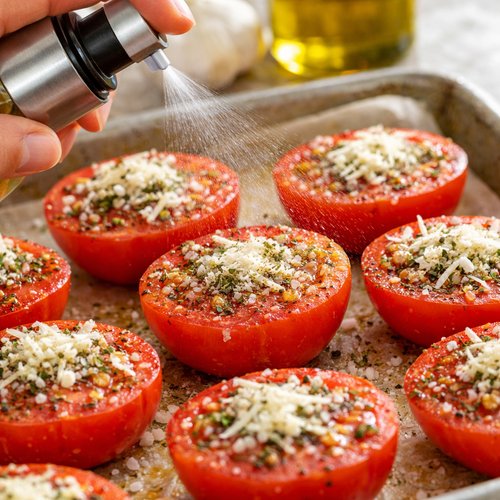
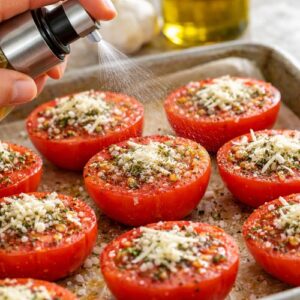
Spray each tomato half lightly all over with olive oil using your pump spray bottle. A 2-second spray per half is plenty. You’re not drenching—you’re coating. This is where that spray bottle beats pouring oil: you use 70% less because there’s zero waste dripping onto the baking sheet. Now sprinkle with kosher salt, black pepper, garlic powder, and dried thyme evenly across each half. Use your fingers to distribute seasonings—they stick better to the oiled surface than if you sprinkle blindly. Top each half with 2 tablespoons of freshly grated Parmesan. Freshly grated cheese melts smoothly and browns evenly. Pre-shredded has anti-caking additives that create grainy, separated texture rather than that glossy, golden coating you’re after.
Step 4: Arrange on Your Baking Sheet
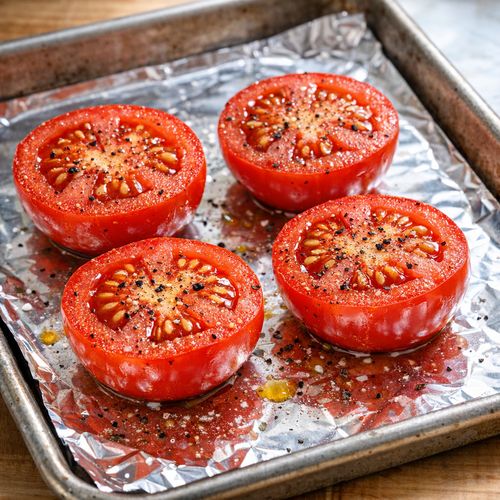
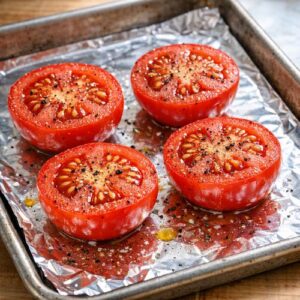
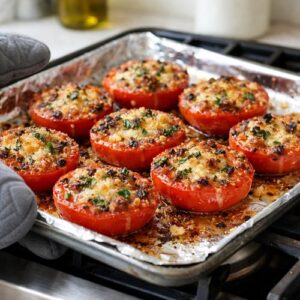
Place all four tomato halves cut-side up on a rimmed baking sheet (the rim catches any juices that escape and prevents them from dripping onto your oven floor—another money-saving win by preventing cleanup disasters). Space them about 2 inches apart so heat circulates evenly. If you’re using a smaller baking sheet, you can fit them closer, but don’t crowd them. Your broiler uses radiant heat from above, so air flow matters.
Step 5: Broil Until Golden and Bubbly
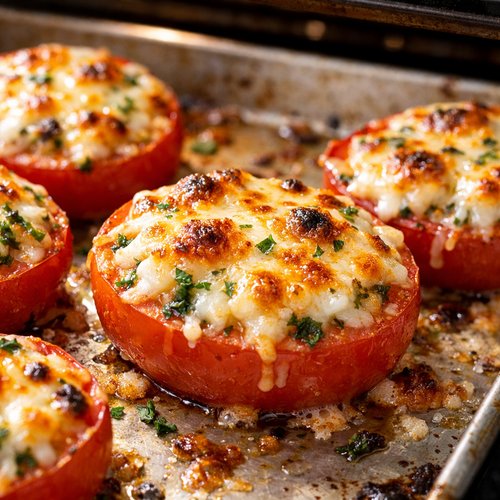
Slide your baking sheet into the preheated broiler. Set a timer for 3 minutes. At 3 minutes, open the broiler and check the cheese. You’re looking for deep golden brown color with just the tiniest hints of darker brown at the edges. If it’s still pale and white, give it another minute. If it’s already dark brown or starting to blacken, pull it out immediately. Broiler timing varies wildly based on oven age and model—my first check is always at 3 minutes, my maximum is 5 minutes. Overcooking the cheese creates bitter flavor, so this is where you stay present.
Step 6: Rest and Serve Immediately
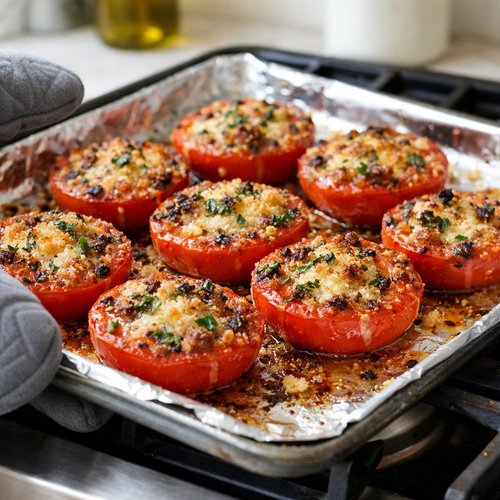
Remove the baking sheet from the broiler using an oven mitt (the sheet is extremely hot). Let it sit on your stovetop for exactly 2 minutes—this allows the cheese to set just slightly so it doesn’t slide off when you plate. The tomato inside continues cooking gently from residual heat. Plate immediately after those 2 minutes. If you have fresh basil on hand, tear a few leaves and scatter across each tomato. Serve as a side to grilled chicken, fish, or alongside crusty bread. This dish is best eaten within 5 minutes of coming out of the broiler.
How to Stretch This Recipe Further
- Make it a light lunch by serving over toasted bread with a side salad. Four tomato halves over two pieces of whole grain toast (about $1.50 total for bread) with a simple green salad ($1.00 for greens) creates a complete meal for two people at $3.50 total. This transforms a side into a full lunch that costs less than a sandwich shop.
- Double the recipe and use leftovers for pasta. Broil 8 tomato halves instead of 4. The next day, chop the cooled tomatoes and toss with cooked pasta, a splash of olive oil, and fresh basil for a no-cook sauce. One recipe feeds 4 as a side and 2 as pasta the next day.
- Freeze extras before broiling to extend the season. In late summer when tomatoes are cheapest, buy extra and freeze halved tomatoes on a sheet tray (unbaked). Once frozen solid, transfer to freezer bags. Broil directly from frozen, adding 2 extra minutes to cooking time. This lets you enjoy summer tomato flavor in February without paying winter prices.
Budget Substitutions That Don’t Sacrifice Quality
- Pre-shredded Parmesan → Freshly grated Parmesan from a wedge: Pre-shredded contains anti-caking agents that prevent smooth melting and create grainy texture. Fresh grated melts like silk and browns evenly. The cost difference is $1.00 per recipe, but the quality improvement is worth every cent. Once you taste the difference, you’ll never go back.
- Fresh thyme → Dried thyme (already in this recipe): Fresh thyme is lovely if you grow it or buy it, but dried thyme has a concentrated flavor. For this recipe, dried actually works better because the broiler’s high heat unlocks its essential oils. Use 1/2 teaspoon dried (as listed) instead of 1 1/2 teaspoons fresh. Dried costs $0.08 per use; fresh costs $2.00 per bunch and you’ll only use half.
- Pricey organic tomatoes → Conventional tomatoes on sale: Tomato flavor comes from ripeness and variety, not organic certification. Buy conventional tomatoes on manager’s special when they’re slightly cheaper, choose Roma or beefsteak varieties (which have better structure than slicing tomatoes), and prioritize ripeness over organic label. Taste difference is zero; price difference is significant.
Expert’s Nutritional Tip: Why This Side Matters More Than You Think
As a registered dietitian, I watch people skip vegetables because they assume sides are “just filler.” This recipe changed conversations with my clients about vegetable intake. One serving (two tomato halves) provides 30% of your daily vitamin C requirement and nearly 10% of your potassium—nutrients your body uses immediately for immune function and heart health. The Parmesan adds calcium and protein (about 6 grams per serving). The olive oil enables absorption of lycopene, tomatoes’ most famous antioxidant. On paper, this is nutrition. In practice, it tastes so indulgent that people actually eat their vegetables. That matters more than the macros.
Can I Store Broiled Tomato Recipe?
Broiled tomatoes are best served immediately, but reality demands flexibility. Refrigerate leftovers in an airtight container for up to 3 days. The cheese will firm up and the tomato will soften further. To reheat, place on a baking sheet and warm in a 350°F oven for 5-7 minutes until the cheese softens again. Don’t microwave—the texture becomes rubbery. Uncooked raw tomato halves can be prepped 4 hours ahead, covered with plastic wrap, and broiled when you’re ready. This makes them perfect for meal prep: season your tomatoes in the morning, broil them 10 minutes before dinner. Freeze unbaked tomato halves for up to 3 months by placing them on a sheet tray, freezing solid, then transferring to freezer bags. Broil directly from frozen, adding 2-3 minutes to cooking time. This strategy lets you buy cheap end-of-season tomatoes and enjoy them year-round.
Nutrition Information
Per serving (2 tomato halves): 95 calories, 6 grams protein, 4 grams fat, 8 grams carbohydrate, 2 grams fiber, 280 milligrams sodium. Vitamin C: 18 mg (30% DV per USDA standards). Potassium: 390 mg (11% DV). Calcium: 220 mg (17% DV). This is the nutritional win: you’re getting substantial micronutrients for under 100 calories and $1.25 per serving. Compare that to restaurant sides that often exceed 200 calories from butter and cream while costing $8. You’re eating better and spending smarter.
What Can I Serve With Broiled Tomato Recipe?
These broiled tomatoes pair beautifully with nearly every protein. I serve them alongside grilled chicken breast (about $3 per breast), baked fish like baked cod with lemon and capers ($5 per fillet), or roasted vegetables. They’re equally at home on a dinner plate next to andouille sausage and shrimp for a low-carb meal. My personal favorite is serving them alongside crusty whole grain bread and a simple green salad for a meatless lunch that costs $2.50 total. The cheese and tomato create enough richness that you don’t miss meat.
- Grilled chicken breast – the classic pairing; tomato acidity balances poultry’s richness while adding vegetables to your plate.
- Baked white fish – delicate fish loves this assertive tomato-cheese combination; together they create balance.
- Crusty bread with olive oil – makes this a vegetarian lunch; costs $2.00 total and satisfies completely.
- Roasted green beans or asparagus – both vegetables cook in the same oven, so broil your tomatoes first, then switch to regular oven for 15 minutes with beans.
Common Mistakes to Avoid
- Using soft or overripe tomatoes. They collapse under broiler heat and turn to mush. Choose firm tomatoes with slight give when you squeeze gently. Roma tomatoes and beefsteak varieties hold their structure best. If your tomatoes are mushy at the store, they’ll be worse broiled.
- Skipping the flat base on the bottom. Tomato halves that roll around cook unevenly—one side cooks fast while the other barely softens. That little sliver you cut off creates stability and even heat exposure. It’s the difference between success and frustration.
- Using pre-shredded Parmesan. The anti-caking additives prevent melting. You end up with grainy, separated texture instead of that gorgeous golden blanket. Buy the wedge and grate it yourself—the quality difference justifies the 90 seconds of grating.
- Walking away during broiling. Broilers are fast and temperamental. The difference between golden and burnt is literally one minute. Stay nearby, set a timer, and check at 3 minutes. Your attention prevents kitchen disasters.
Make-Ahead Guide
Morning preparation (8 hours ahead): Wash and halve your tomatoes, create that flat base on each half, and arrange on your baking sheet. Cover tightly with plastic wrap and refrigerate. Season and add cheese up to 30 minutes before broiling. The tomatoes will release some liquid, which is fine—pat them dry just before cooking.
Evening preparation (2 hours ahead): Prep tomatoes and refrigerate unseasoned. Season and add cheese just before broiling—this prevents salt from drawing out excess moisture.
Freezer prep: Halve tomatoes, trim the base, arrange on a sheet tray, and freeze solid (about 4 hours). Transfer to a labeled freezer bag and freeze up to 3 months. Broil directly from frozen, adding 2-3 minutes to cooking time. No thawing necessary.
Seasonal Variations
- Summer (peak tomato season): Use locally grown heirloom tomatoes if available—they have superior flavor. Add fresh basil to the cheese layer and use fresh thyme instead of dried. The abundance of tomatoes means peak flavor and lowest prices.
- Early fall: Stick with your favorite summer varieties. Tomato prices remain reasonable through September. This is your last window for truly affordable tomatoes before winter arrives.
- Winter: Prices spike dramatically. Buy fewer tomatoes, or skip this dish entirely and rotate in other seasonal vegetables. Consider freezing tomatoes from peak season specifically for winter broiling.
- Spring: New crop tomatoes appear but are pricey. Wait another month for prices to settle. Spring is when I transition to other seasonal sides and save broiled tomatoes for when they’re abundant and affordable again.

Broiled Tomato Recipe
Ingredients
Method
- Turn your broiler to high heat (around 500°F). This step is non-negotiable because broilers are all different—some heat up in 2 minutes, others need 5. Give yours a solid 5 minutes to reach full temperature. Position your oven rack so it sits 6 inches below the heating element, not directly underneath. This distance matters tremendously. Too close and your cheese burns black before the tomato interior softens. Too far and everything stays pale and rubbery. If your broiler has a "high" and "low" setting, always choose high for this recipe.
- Cut your tomatoes in half lengthwise (from stem to bottom). You'll have two halves per tomato. Here's the budget-conscious pro tip that changes everything: slice a paper-thin sliver off the rounded bottom of each half. This creates a flat base so your tomato sits upright on the baking sheet without rolling or tipping. Wasted tomato? Essentially zero—you're removing maybe 1/8 inch. What you gain is stability and even cooking. Pat the cut sides gently with a paper towel to remove excess moisture. Drier surfaces brown better and accept seasonings more evenly.
- Spray each tomato half lightly all over with olive oil using your pump spray bottle. A 2-second spray per half is plenty. You're not drenching—you're coating. This is where that spray bottle beats pouring oil: you use 70% less because there's zero waste dripping onto the baking sheet. Now sprinkle with kosher salt, black pepper, garlic powder, and dried thyme evenly across each half. Use your fingers to distribute seasonings—they stick better to the oiled surface than if you sprinkle blindly. Top each half with 2 tablespoons of freshly grated Parmesan. Freshly grated cheese melts smoothly and browns evenly. Pre-shredded has anti-caking additives that create grainy, separated texture rather than that glossy, golden coating you're after.
- Place all four tomato halves cut-side up on a rimmed baking sheet (the rim catches any juices that escape and prevents them from dripping onto your oven floor—another money-saving win by preventing cleanup disasters). Space them about 2 inches apart so heat circulates evenly. If you're using a smaller baking sheet, you can fit them closer, but don't crowd them. Your broiler uses radiant heat from above, so air flow matters.
- Slide your baking sheet into the preheated broiler. Set a timer for 3 minutes. At 3 minutes, open the broiler and check the cheese. You're looking for deep golden brown color with just the tiniest hints of darker brown at the edges. If it's still pale and white, give it another minute. If it's already dark brown or starting to blacken, pull it out immediately. Broiler timing varies wildly based on oven age and model—my first check is always at 3 minutes, my maximum is 5 minutes. Overcooking the cheese creates bitter flavor, so this is where you stay present.
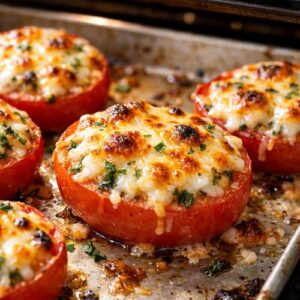
- Remove the baking sheet from the broiler using an oven mitt (the sheet is extremely hot). Let it sit on your stovetop for exactly 2 minutes—this allows the cheese to set just slightly so it doesn't slide off when you plate. The tomato inside continues cooking gently from residual heat. Plate immediately after those 2 minutes. If you have fresh basil on hand, tear a few leaves and scatter across each tomato. Serve as a side to grilled chicken, fish, or alongside crusty bread. This dish is best eaten within 5 minutes of coming out of the broiler.
Notes
FAQs
Can I make this recipe with cherry or grape tomatoes?
Technically yes, but I don’t recommend it. Cherry and grape tomatoes are smaller and more prone to collapsing under broiler heat. They’ll cook through before the cheese browns properly. Stick with larger varieties like Roma, beefsteak, or heirloom tomatoes that have substantial flesh and fewer seeds. The structure holds up to high heat and cooks evenly.
What if my broiler only has one temperature setting?
That’s fine. Most standard broilers run around 500°F regardless of “high” or “low” settings—the difference is usually rack position. Keep your rack 6 inches from the heat source and watch carefully at 3 minutes. Your timing might be slightly different from mine, but the method remains the same. The key is staying present and checking early.
Can I use mozzarella instead of Parmesan?
You can, but the result will be different. Mozzarella is milder and creates a softer, less flavorful topping. Parmesan’s sharpness pairs specifically with tomato’s acidity. If budget is your concern, use the Parmesan but reduce the amount slightly—1.5 tablespoons per half instead of 2. You’ll save $0.50 and still get that essential flavor. But honestly, Parmesan is the ingredient worth not substituting on.
Do I need to remove the seeds from my tomato halves?
No. The seeds and jelly add flavor and are perfectly edible. If your tomatoes are particularly juicy (over-ripe specimens), gently squeeze each half over the sink to remove excess liquid before seasoning. This prevents the baking sheet from pooling with water that can prevent browning. But don’t scoop out seeds—that’s wasted tomato flesh.
How do I know if my broiler is hot enough?
Give it a full 5 minutes to preheat after turning it on. You can test readiness by placing your hand about 6 inches below the heating element for 3 seconds—you should feel intense heat that makes you pull away immediately. If you don’t feel serious heat, give it another 2 minutes. A properly preheated broiler makes the difference between golden tomatoes and pale, undercooked ones.
More Budget-Friendly Recipes
- Baked Alaskan Cod Recipe – omega-3 rich fish cooked simply with pantry seasonings; pairs perfectly with broiled tomatoes for a complete meal under $8 per serving.
- Asparagus Prosciutto Recipe – another broiler-friendly vegetable side that cooks simultaneously with your tomatoes; adds protein and richness without breaking budget.
- Baked Pear Recipe – sweet dessert that uses the same broiler technique and pantry staples; demonstrates how one cooking method creates multiple meals.
This broiled tomato recipe is proof that restaurant-quality food lives in your kitchen, not in expensive restaurants. It’s proof that grocery budgets and great flavor aren’t enemies—they’re partners. Every time you make this, you’re choosing intentionality over convenience, quality over quantity, and connection over cost-cutting. That’s the real win. That’s what my family taught me at our dinner table all those years ago, and it’s what I carry into my practice every single day. Food made with care tastes better. Food made with love nourishes deeper. Take care with love and flavor!