Baked Halibut Recipe
This post contains affiliate links. As an Amazon Associate I earn from qualifying purchases.
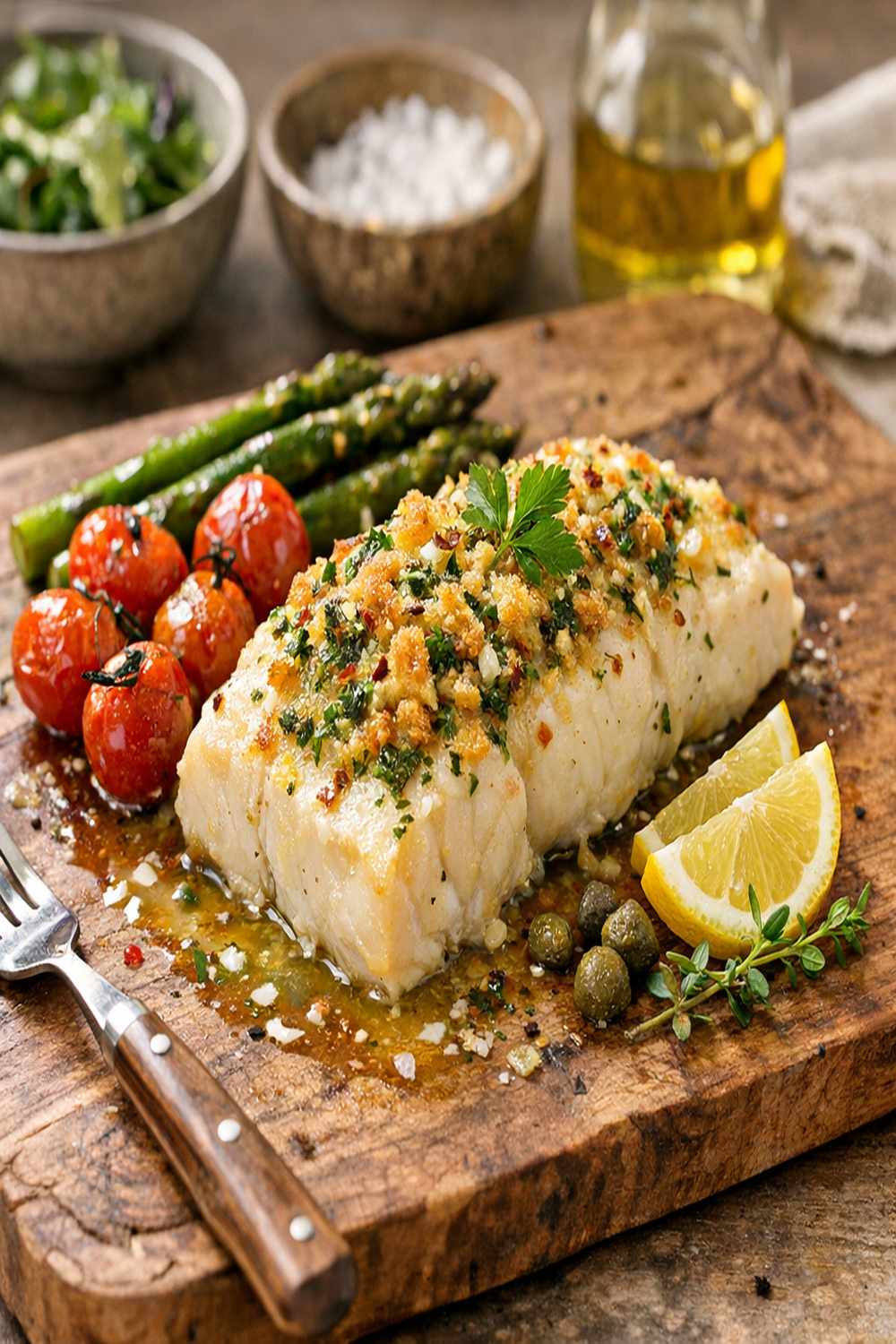
This dish looks and tastes like it cost you $40 at a high-end seafood restaurant. The reality? You’ll spend under $10 total, and it takes just 30 minutes from start to table. I’ve built my entire career on this principle: incredible nutrition and flavor don’t require expensive ingredients or complicated techniques. They require intention. This baked halibut is my proof. Pair it with something hearty like baked latkes or roasted cabbage, and you’ve got a complete dinner that rivals any menu.
Restaurant-Quality Baked Halibut Recipe for Under $10 (No Shortcuts on Flavor)
When I was growing up in Norwood, my dad would occasionally splurge on fresh halibut from the market. Those family dinners around the table—the steam rising off the plate, the way lemon juice made everything taste alive—those moments taught me that elegant food doesn’t need to be complicated or expensive. It needs butter, heat, and presence.
Years later, when I became a registered dietitian, I realized that most home cooks avoid fish because they’re afraid: afraid of overcooking it, afraid of wasting money, afraid they’ll mess it up. I get it. But here’s what I know from both nutrition science and my own kitchen: white fish like halibut is one of the most forgiving proteins you can cook. It’s also one of the most affordable when you buy it smart.
This recipe strips away the intimidation and keeps the elegance. You’re going to nail this.
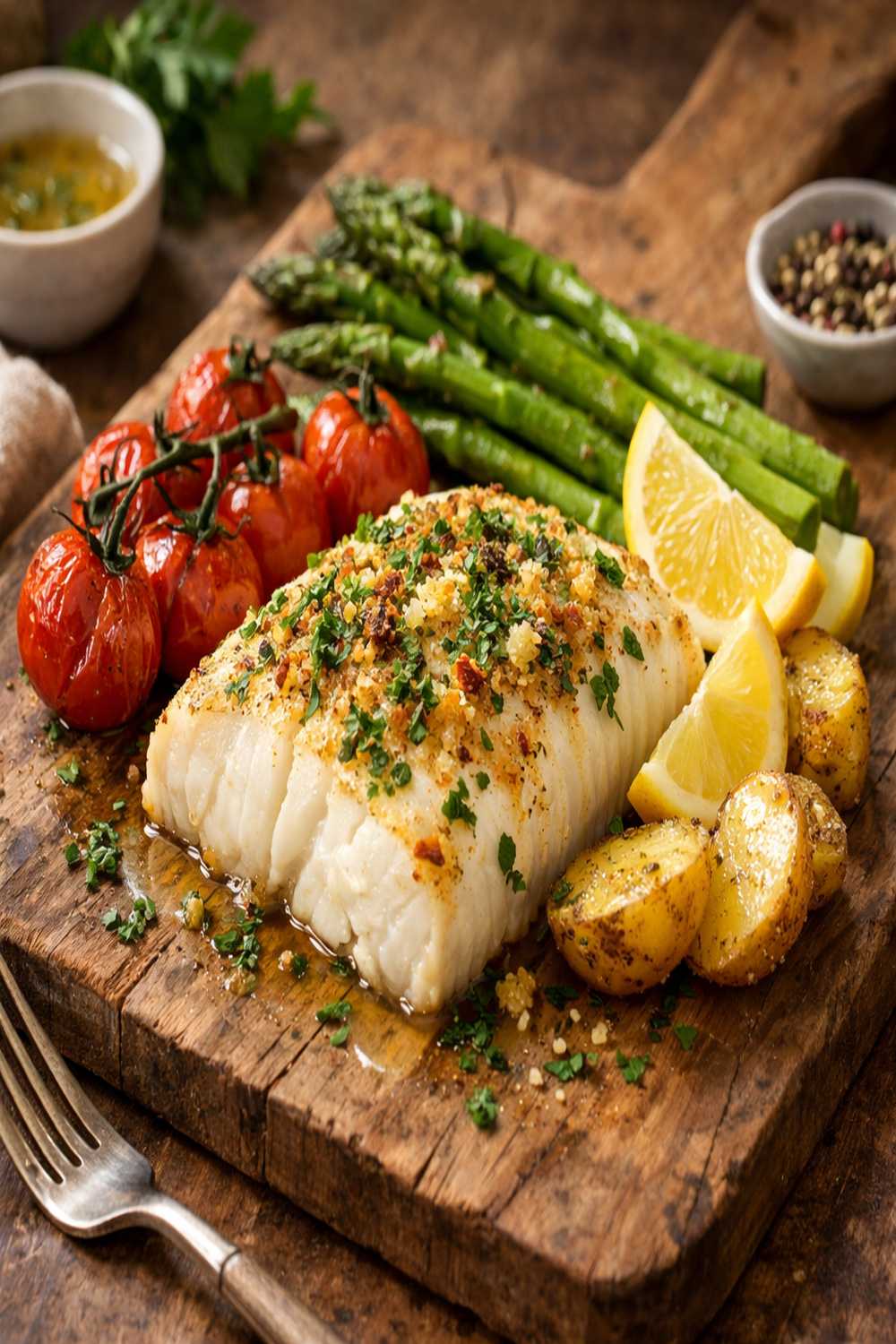
The Real Cost Breakdown
Let’s talk numbers because I believe you deserve to know exactly where your money goes. This recipe makes 4 servings, so divide the total by four to see your per-plate investment. I’ve shopped these prices at standard Ohio grocery stores, but yours may vary slightly by region and season.
- Halibut fillet (1 pound) – $8–12 depending on whether it’s wild-caught or farmed. Buy from the counter, ask what’s freshest that day, and don’t be shy about asking the fishmonger to cut a thinner piece if the one displayed is too thick.
- Unsalted butter (2 tablespoons) – approximately $0.30. You likely have this in your fridge already.
- Fresh garlic (1 teaspoon minced) – $0.15 if buying a bulb; much cheaper than pre-minced jars.
- Paprika (¼ teaspoon) – $0.05 from your spice cabinet.
- Sea salt (½ teaspoon) – $0.02 from bulk or your pantry.
- Black pepper (½ teaspoon) – $0.02 from your grinder.
- Fresh lemon (for slicing) – $0.50 for half a lemon.
- Fresh parsley (1 tablespoon chopped) – $0.25 if buying a bunch; you’ll use the rest in salads and soups all week.
Total cost: approximately $9.29 for 4 servings, or about $2.32 per plate. A comparable restaurant entree costs $28–35. You’re eating for the price of a coffee.
Smart Shopping Tips for This Recipe
- Buy halibut on sale days (usually Wednesday or Thursday at most grocers) – Sign up for your store’s digital coupon program. Many supermarkets offer $2–3 off per pound on seafood during promotional weeks. A 1-pound fillet typically costs $8–10 on sale versus $12–14 regular price.
- Frozen halibut works beautifully and costs 20–30% less – Thaw it in the refrigerator overnight (not on the counter). Frozen fish is often flash-frozen at peak freshness within hours of catching, so quality is excellent. This is where I splurge less and nobody notices the difference.
- Buy fresh herbs in bunches, not those tiny plastic containers – A bunch of parsley at the farmer’s market or produce section costs $1–1.50 and provides enough for this recipe plus salads, soups, and garnishes for a full week. Freeze extras in ice cube trays with a bit of water for later use.
- Ask the fishmonger to portion your halibut for you – Many markets will cut it into 4-ounce fillets at no charge. This saves time and ensures even cooking.
The Ingredients
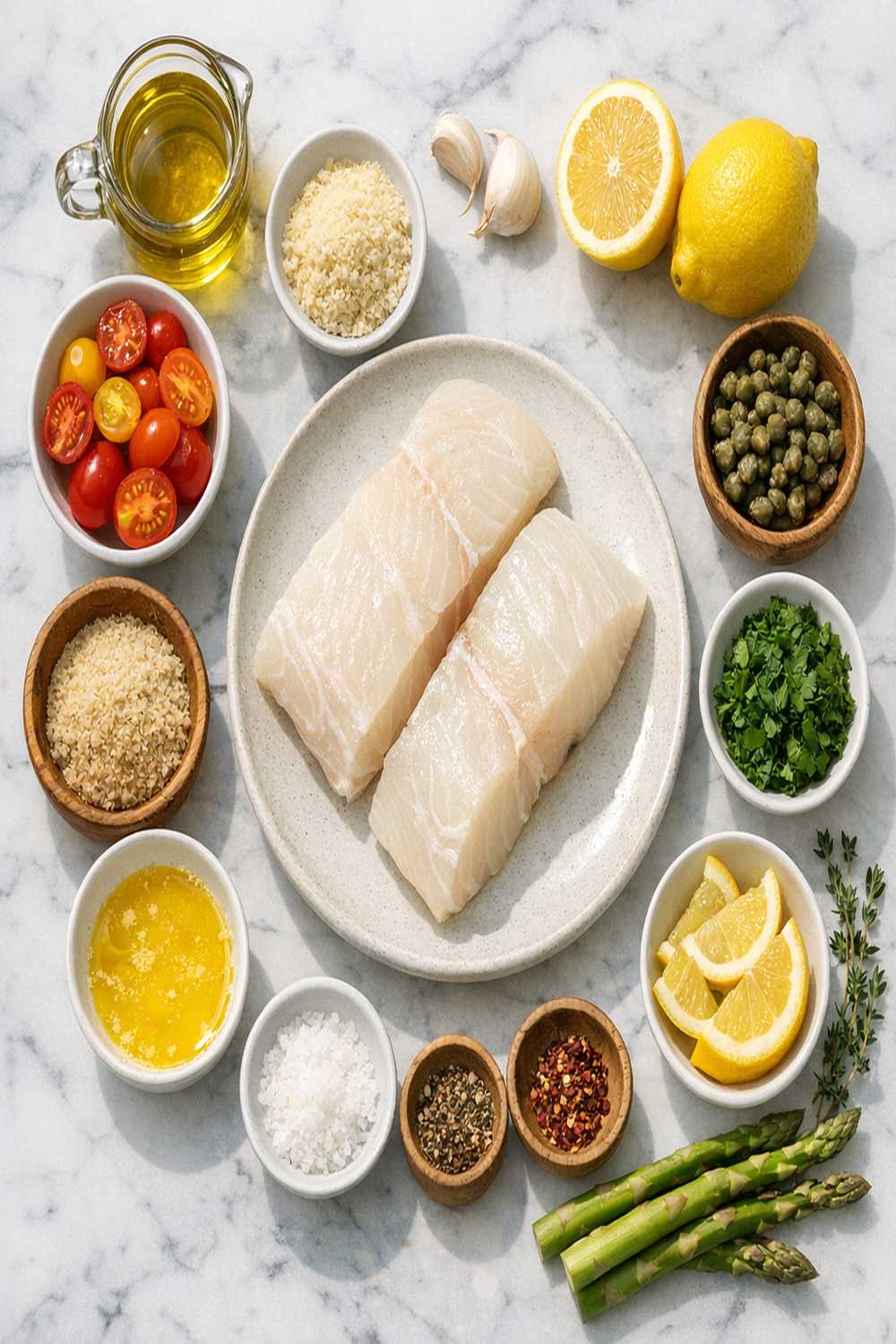
Every ingredient here earns its place and its cost. There’s no filler, no pretense. Just straightforward components that work together to create something greater than themselves—kind of like a good family dinner, actually.
- ½ teaspoon fresh thyme leaves (optional, but complements the butter beautifully)
- ½ teaspoon sea salt (fine or coarse, your choice)
- 3 tablespoons fresh flat-leaf parsley (finely chopped, not dried)
- ½ teaspoon freshly ground black pepper (never from pre-ground containers older than 6 months)
- 1 teaspoon fresh garlic (minced, not pre-minced from a jar)
- 1 pound halibut fillet (preferably 4 portions, about 4 ounces each, and ¾ inch thick)
- 1 medium lemon (sliced into thin rounds for garnish)
- ¼ teaspoon paprika (sweet or smoked, depending on your preference)
- 2 tablespoons unsalted butter (melted and slightly cooled)
- 2 tablespoons dry white wine or low-sodium vegetable broth (optional but adds tremendous depth)
Serves: 4 people | Prep time: 8 minutes | Cook time: 13 minutes | Total time: 21 minutes
How to Make Baked Halibut Recipe Without Breaking the Bank
This is smart cooking, not a compromise. Every step is designed to deliver restaurant results using pantry staples and techniques that won’t let you down. If you’ve never cooked halibut before, this method is forgiving enough that you’ll succeed. If you cook fish regularly, you’ll appreciate how streamlined this approach is.
Step 1: Preheat Your Oven and Prep Your Workspace
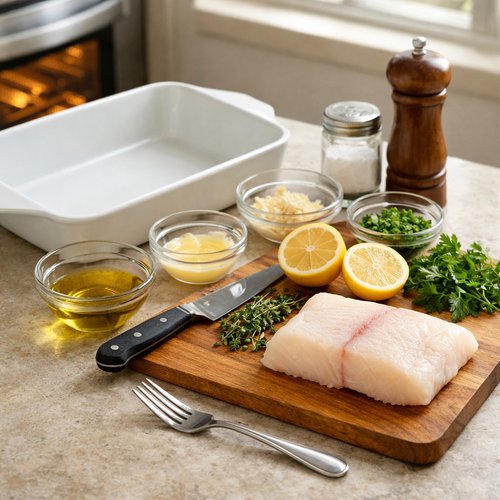
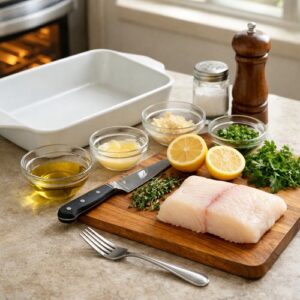
Turn your oven to 400 degrees Fahrenheit and allow it 10 minutes to fully preheat. This is non-negotiable. An under-heated oven means longer cooking time and a higher risk of drying out your fish. While the oven heats, gather your ingredients and equipment—baking dish, small bowl, fork, and cutting board—within arm’s reach. This is called mise en place, a French culinary term meaning “everything in its place.” It sounds fancy, but it really just means you won’t be scrambling mid-recipe.
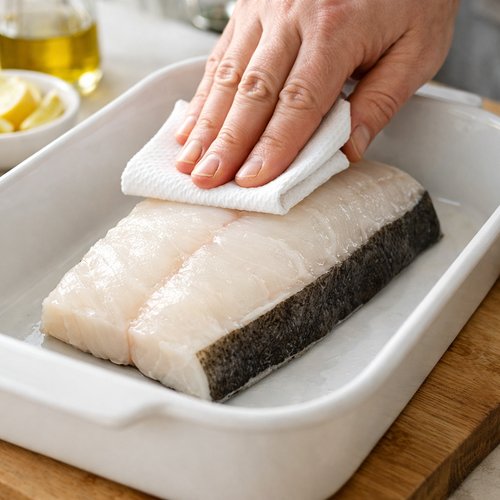
Step 2: Pat Your Halibut Dry and Position It Properly
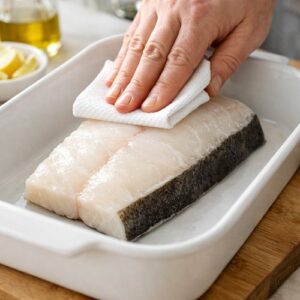
Remove your halibut from the refrigerator and gently pat both sides completely dry with a paper towel. This step is critical and often overlooked. Moisture on the surface prevents proper browning and can trap steam, making the fish rubbery instead of tender. Place your dried fillet skin-side down in a baking dish just large enough to fit it (an 8×11-inch dish is ideal). If your pieces are thick, don’t worry—they’ll cook evenly because you’ll rely on oven temperature, not pan-searing.
Step 3: Create Your Flavor Base
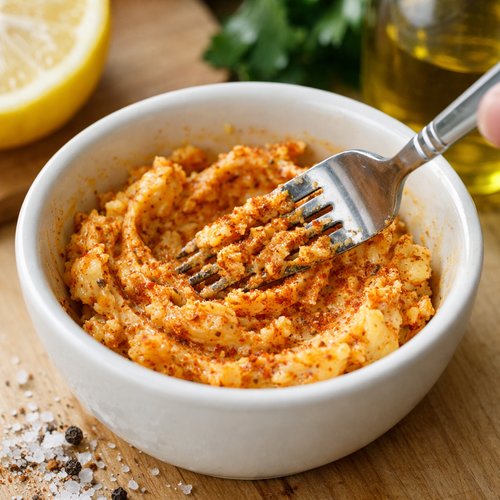
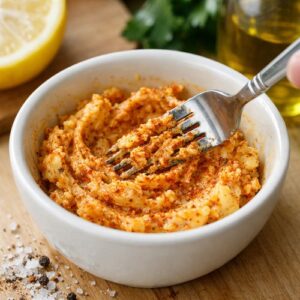
In a small bowl, combine your melted butter, minced fresh garlic, paprika, sea salt, black pepper, and fresh thyme if using. Stir this gently with a fork until the spices are distributed evenly—you should see flecks of paprika throughout the butter. This is your flavor foundation. If you’re adding the optional white wine or broth, stir it in now. The acid from wine brightens the fish; the broth adds umami depth. Both work beautifully.
Step 4: Apply Your Butter Mixture Strategically
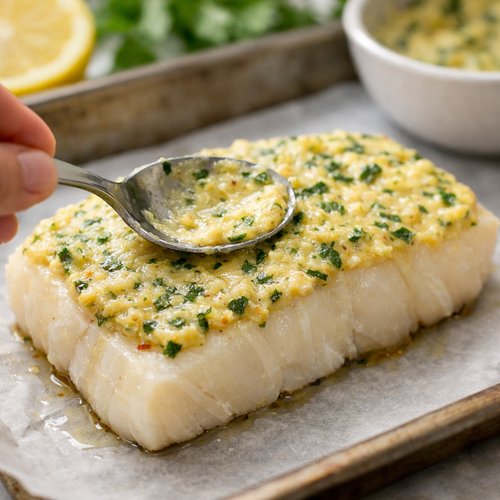
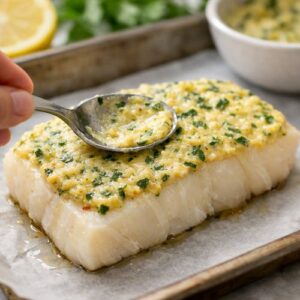
Pour your butter mixture evenly over the halibut fillet, making sure you coat the top surface completely. Use the back of a spoon to gently spread it if needed. Don’t pour it into the baking dish around the fish—you want it on top of the protein where it will season and baste. This is the moment where your $9 meal starts to smell like a $35 restaurant entree.
Step 5: Bake Until Opaque and Flaky
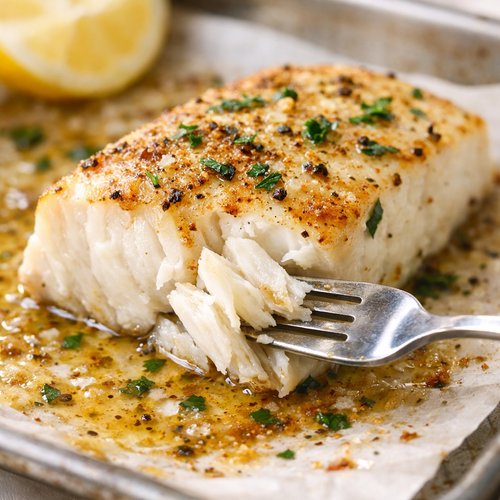
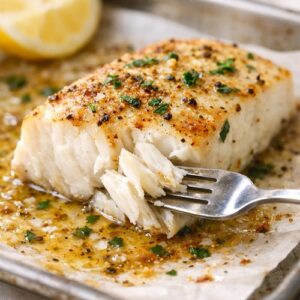
Place your baking dish in the preheated oven. Set a timer for 12 minutes and check for doneness at that mark. The halibut is perfectly cooked when it’s opaque throughout and flakes gently when pressed with a fork. If you’re cooking thinner pieces (½ inch), 11 minutes may be sufficient. Thicker pieces (1 inch) may need 14–15 minutes. The USDA recommends cooking fish to an internal temperature of 145 degrees Fahrenheit, but honestly, visual cues are more reliable here. Overcooked fish tastes like gym socks. Undercooked tastes like the sea in the best way.
Step 6: Finish With Fresh Brightness
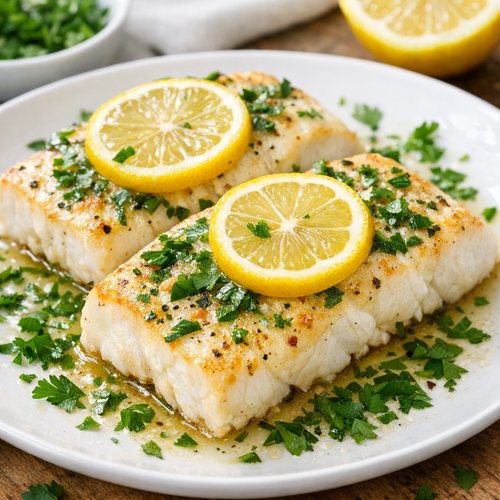
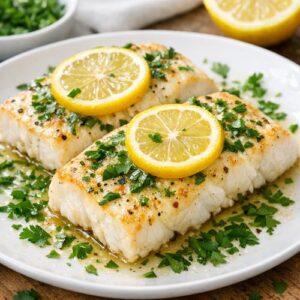
Remove your halibut from the oven—be careful; the baking dish is hot. Arrange fresh lemon slices over the top of each fillet and scatter chopped parsley across the plate. The heat from the fish will gently warm the lemon, making its oils aromatic. The parsley adds a fresh, clean note that cuts through the richness of the butter. This is where the dish goes from good to memorable.
Expert’s Nutritional Tip: Why Halibut Is a Dietitian’s Secret Weapon
As a registered dietitian, I recommend halibut to my clients constantly because it’s one of the few proteins that delivers exceptional nutrition at a reasonable price point. A 4-ounce serving provides approximately 30 grams of high-quality protein, is naturally low in mercury compared to other white fish, and contains selenium, a mineral critical for thyroid function and immune health. The omega-3 content isn’t as dramatic as salmon, but it’s still meaningful—about 400 milligrams per serving. And here’s what matters most: it’s affordable enough that your family will eat it regularly without budgetary strain. Consistency beats perfection in nutrition every single time.
Make-Ahead Guide: Meal Prep Like a Professional
Here’s how to prep this recipe so you can have it on the table in under 15 minutes on a busy weeknight:
- Prep the butter mixture up to 2 days ahead – Combine melted butter, garlic, paprika, salt, pepper, and thyme in a small airtight container. Store in the refrigerator. When you’re ready to cook, the mixture will have solidified slightly; just microwave it for 15 seconds to return it to pourable consistency.
- Portion and freeze the halibut with parchment between pieces – If you buy a whole fillet, portion it into individual servings, separate each piece with parchment paper, and freeze in a flat container. Thaw in the refrigerator 6–8 hours before cooking. This method actually improves moisture retention during freezing.
- Chop parsley and store in a damp paper towel in a sealed plastic bag – This keeps it fresh for up to 4 days. Some of my clients even freeze parsley in ice cube trays with a splash of water; thaw as needed for hot dishes.
- Slice your lemon the morning of cooking and store in an airtight container – Lemon oxidizes over time, so slice it fresh or up to 6 hours ahead. Keep it refrigerated.
How to Stretch This Recipe Further
- Feed 6 people instead of 4 by buying 1.5 pounds of halibut instead of 1 pound – The cooking time increases by only 2–3 minutes. Use a larger baking dish (9×13 inches) and increase your butter mixture by 50% (so 3 tablespoons butter, 1.5 teaspoons garlic, etc.). Cost per person drops from $2.32 to about $1.85.
- Transform leftovers into fish tacos or grain bowls the next day – Flake any remaining halibut into warm corn tortillas with shredded cabbage and a drizzle of lime crema. Or layer it over quinoa with roasted vegetables. The cooked fish keeps for 3 days in the refrigerator and actually becomes more flavorful as flavors meld.
- Double the recipe and freeze half in individual portions for later – Bake the full batch, cool completely, then wrap each fillet individually in parchment and foil. Freeze for up to 3 months. To reheat, thaw overnight in the refrigerator and warm gently in a 300-degree oven for 8–10 minutes. It won’t taste reheated—it tastes like dinner again.
Budget Substitutions That Don’t Sacrifice Quality
- Halibut (wild-caught or premium farmed) -> Cod, Haddock, or Tilapia – These white fish have similar mild flavor and flaky texture. They often cost $2–4 less per pound. Cooking time remains identical. You lose nothing in the final dish except money from your grocery bill.
- Unsalted butter -> Olive oil or a butter-oil blend – Use the same measurement. Olive oil creates a slightly more Mediterranean flavor; a 50-50 blend of melted butter and olive oil splits the difference between richness and lightness. Cost is nearly identical, sometimes cheaper.
- Fresh garlic -> Jarred minced garlic (in a pinch) – I don’t recommend this as a habit, but jarred minced garlic works when fresh garlic isn’t available. Use half the amount because it’s concentrated. Quality isn’t quite as bright, but your dish still succeeds.
- Fresh parsley -> Frozen parsley cubes or dried parsley – Frozen parsley (in ice cube trays) works beautifully stirred into the hot dish. Use the same amount. Dried parsley is less flavorful; use only ½ tablespoon. Fresh is worth seeking out, but these alternatives keep you from abandoning the recipe if parsley isn’t available.
- Sea salt -> Table salt – Use only ⅜ teaspoon because table salt is denser and more sodium-concentrated per volume. The dish tastes nearly identical, though sea salt has a slightly cleaner mineral note.
Common Mistakes to Avoid (So You Don’t Waste That Fish)
- Mistake: Cooking cold fish straight from the refrigerator – Cold fish won’t cook evenly. The outside overcooks before the inside reaches temperature. Remove your halibut from the refrigerator 10–15 minutes before cooking so it reaches room temperature. This isn’t a fancy technique; it’s basic thermodynamics.
- Mistake: Skipping the pat-dry step – I mentioned this earlier, but it’s critical enough to repeat. Surface moisture creates steam, steam creates rubberiness. Dry your fish. Always.
- Mistake: Opening the oven door repeatedly to check on it – Every time you open the door, heat escapes and cooking time extends. Set your timer, trust it, and peek just once at the 12-minute mark.
- Mistake: Cooking halibut that’s too thin or too thick – Ask your fishmonger to cut pieces to ¾-inch thickness. This thickness cooks perfectly in a standard home oven without fussing. Too thin (½ inch) and it’s done in 8 minutes. Too thick (1.5 inches) and it takes 18 minutes and requires babysitting.
Seasonal Variations: Adapt This Recipe All Year
- Spring: Add fresh dill and a squeeze of lemon – Replace the parsley with fresh dill (same amount). Dill is the quintessential spring herb and pairs beautifully with delicate white fish. Add an extra ½ teaspoon lemon zest to the butter mixture for brightness.
- Summer: Incorporate fresh basil and sun-dried tomatoes – Use fresh basil instead of parsley. Crumble a small handful of sun-dried tomatoes (about 2 tablespoons) into the butter mixture. This gives you a Mediterranean flair that feels summery and restaurant-quality.
- Fall: Warm it up with sage and a pinch of cayenne – Replace thyme with fresh sage (½ teaspoon). Add just a whisper of cayenne pepper (⅛ teaspoon) to the butter mixture for subtle heat. Sage has an earthy, warming quality that feels autumnal.
- Winter: Deepen with capers and a touch of mustard – Stir 1 tablespoon of rinsed capers and ½ teaspoon of Dijon mustard into your butter mixture. This creates a sophisticated briny note that feels elegant and warming.
Can I Store Baked Halibut Recipe?
Yes, and storage is straightforward. Cooled halibut keeps in an airtight container in the refrigerator for up to 3 days. The butter sauce helps preserve moisture, so it actually tastes better the next day as flavors meld. Don’t freeze cooked halibut for longer than 3 months—quality degrades with extended freezing.
To reheat, place it skin-side down on a baking sheet, cover loosely with foil, and warm in a 300-degree Fahrenheit oven for 8–10 minutes until heated through. Low heat prevents the exterior from drying out. Alternatively, reheat gently in a covered skillet over low heat, which preserves moisture. Never microwave; the uneven heat will turn your beautiful fish into a rubbery mess.
Leftover halibut is also brilliant flaked into salads, grain bowls, or fish tacos. The slight drying that occurs during reheating doesn’t matter when the fish is mixed with other components.
Nutrition Information
According to USDA nutritional databases, one 4-ounce serving of baked halibut (prepared with this recipe) contains approximately 180 calories, 30 grams of protein, 8 grams of fat (mostly from the butter), and zero carbohydrates. The sodium content is approximately 380 milligrams per serving, which is reasonable for a finished dish when using unsalted butter and sea salt in moderation.
Here’s what this means from a nutritional value perspective: you’re getting a complete, high-protein meal for about 180 calories, which is exceptional nutrition density. Add a side of roasted vegetables (minimal caloric cost, maximum nutrient density) and a starch, and you’ve built a balanced plate for under $4 total. Few restaurant meals deliver this ratio of nutrients to dollars spent.
The selenium content I mentioned earlier—approximately 55 micrograms per 4-ounce serving—supports thyroid function and acts as a powerful antioxidant. This is nutrition that works for your body, not just fills your stomach.
What Can I Serve With Baked Halibut Recipe?
Halibut’s delicate, buttery flavor pairs beautifully with virtually any vegetable and most starches. Here are the most budget-friendly and seasonally appropriate sides:
- Roasted Cabbage – Baked cabbage costs under $1 per serving and adds textural contrast with its slight caramelization. The sulfur compounds in cabbage actually complement white fish beautifully.
- Steamed Broccoli with Garlic – Broccoli is perpetually affordable, requires 10 minutes to steam, and benefits from the butter sauce drizzled from your fish. Cost: about $0.50 per serving.
- Rice or Quinoa Pilaf – A simple rice pilaf made with vegetable broth costs under $1 per serving and soaks up the lemon-butter sauce. It also stretches your meal further if you have guests.
- Roasted Root Vegetables – Carrots, beets, and parsnips tossed with a little oil, salt, and pepper roast in the same 400-degree oven as your halibut (just start them 15 minutes earlier). Cost: about $1 per serving.
- Baked Latkes – Baked latkes made from shredded potatoes provide a crispy, starchy element that balances the lightness of fish. They’re also fun and feel special on a weeknight.
- Simple Green Salad – Mixed greens, a squeeze of lemon, a drizzle of olive oil, and sea salt cost about $0.75 per person and add freshness. The acidity of the salad balances the richness of the butter.

Baked Halibut Recipe
Ingredients
Method
- Turn your oven to 400 degrees Fahrenheit and allow it 10 minutes to fully preheat. This is non-negotiable. An under-heated oven means longer cooking time and a higher risk of drying out your fish. While the oven heats, gather your ingredients and equipment—baking dish, small bowl, fork, and cutting board—within arm's reach. This is called mise en place, a French culinary term meaning "everything in its place." It sounds fancy, but it really just means you won't be scrambling mid-recipe.
- Remove your halibut from the refrigerator and gently pat both sides completely dry with a paper towel. This step is critical and often overlooked. Moisture on the surface prevents proper browning and can trap steam, making the fish rubbery instead of tender. Place your dried fillet skin-side down in a baking dish just large enough to fit it (an 8x11-inch dish is ideal). If your pieces are thick, don't worry—they'll cook evenly because you'll rely on oven temperature, not pan-searing.
- In a small bowl, combine your melted butter, minced fresh garlic, paprika, sea salt, black pepper, and fresh thyme if using. Stir this gently with a fork until the spices are distributed evenly—you should see flecks of paprika throughout the butter. This is your flavor foundation. If you're adding the optional white wine or broth, stir it in now. The acid from wine brightens the fish; the broth adds umami depth. Both work beautifully.
- Pour your butter mixture evenly over the halibut fillet, making sure you coat the top surface completely. Use the back of a spoon to gently spread it if needed. Don't pour it into the baking dish around the fish—you want it on top of the protein where it will season and baste. This is the moment where your $9 meal starts to smell like a $35 restaurant entree.
- Place your baking dish in the preheated oven. Set a timer for 12 minutes and check for doneness at that mark. The halibut is perfectly cooked when it's opaque throughout and flakes gently when pressed with a fork. If you're cooking thinner pieces (½ inch), 11 minutes may be sufficient. Thicker pieces (1 inch) may need 14–15 minutes. The USDA recommends cooking fish to an internal temperature of 145 degrees Fahrenheit, but honestly, visual cues are more reliable here. Overcooked fish tastes like gym socks. Undercooked tastes like the sea in the best way.
- Remove your halibut from the oven—be careful; the baking dish is hot. Arrange fresh lemon slices over the top of each fillet and scatter chopped parsley across the plate. The heat from the fish will gently warm the lemon, making its oils aromatic. The parsley adds a fresh, clean note that cuts through the richness of the butter. This is where the dish goes from good to memorable.
Notes
FAQs
Can I use frozen halibut for this recipe?
Absolutely. Frozen halibut works beautifully and often costs 20–30% less than fresh. Thaw it in the refrigerator overnight (never on the counter). Once thawed, pat it completely dry before cooking. Quality is excellent because most fish is flash-frozen within hours of catching, so you’re actually getting incredibly fresh fish. The only difference you’ll notice is the price savings.
My halibut cooked in 10 minutes instead of 13. Is it undercooked?
Likely not. Halibut thickness varies dramatically, and thinner pieces (½ inch) cook faster than thicker ones (¾ inch or more). Check doneness by gently flaking the thickest part with a fork. If it separates into opaque flakes easily, it’s done. If it’s translucent or resists flaking, give it 2–3 more minutes. Visual cues are more reliable than timing when cooking fish.
Can I make this recipe without the wine or broth you mention as optional?
Yes. The recipe works perfectly with just butter, garlic, and spices. The wine or broth adds depth and a subtle acidity that’s lovely, but it’s not essential. If you’re avoiding alcohol, skip the wine. If you prefer simplicity, skip both. The dish remains delicious because the core flavors—butter, garlic, lemon—are strong enough to carry it.
Is this recipe appropriate for someone with heart health concerns?
Yes, with mindful portion sizing. Halibut is lean, heart-healthy protein. The butter is a source of saturated fat (2 tablespoons contains about 7 grams of saturated fat per serving), but in the context of a balanced meal with vegetables, it’s reasonable. If you’re managing sodium due to blood pressure concerns, use less salt and consider using olive oil instead of butter. Talk to your doctor or a registered dietitian about personalized recommendations, but generally, this recipe is heart-healthy when paired with plenty of vegetables and whole grains.
Why does my halibut sometimes taste fishy in an unpleasant way?
This usually indicates the fish was either not fresh when you purchased it, or it was overcooked. Fresh halibut should smell mild and slightly sweet, like the ocean on a calm day. If it smells strongly fishy or ammonia-like at the fish counter, don’t buy it. Overcooked fish develops a harsh flavor because the proteins denature excessively. Trust the visual cues I shared earlier and remove it from the oven the moment it’s opaque. Undercooked is better than overcooked.
Common Questions About This Recipe
How do I know if the halibut at the store is actually fresh?
Smell it. Fresh fish should smell briny and clean, like a fresh ocean breeze. If it smells strongly fishy, ammonia-like, or unpleasant in any way, it’s not fresh enough. Look at the color: it should be a uniform pale white or slightly translucent white, not dull gray or yellowing. Ask the fishmonger when it was delivered—most quality markets receive fresh fish 2–3 times per week. If the halibut was delivered that morning, buy it with confidence.
Can I cook this on a stovetop skillet instead of the oven?
Yes, though the results differ slightly. Heat 2 tablespoons of butter in a large skillet over medium-high heat. Once foaming, gently lay your halibut skin-side up (not skin-side down for this method) and cook for 5–6 minutes. Add your garlic, paprika, salt, and pepper directly to the pan, then reduce heat to medium-low, add the optional wine or broth, cover loosely with a lid or foil, and cook 4–5 minutes until opaque. Finish with lemon and parsley. This method develops slightly more color on the bottom but requires more active monitoring.
What if I don’t have fresh parsley?
Use fresh basil, dill, or chives in the same amount. Or skip the fresh herb entirely and rely on the lemon juice for freshness. If you have only dried parsley, use 1 teaspoon instead of 3 tablespoons (dried is more concentrated). Honestly, the butter and lemon are strong enough that this dish doesn’t fail without fresh herbs, though they do elevate it beautifully.
Is there a way to make this lower in fat?
Yes. Use 1 tablespoon of butter instead of 2, and add 1 tablespoon of lemon juice and ½ teaspoon of white wine to the remaining butter. This reduces total fat by 25% while keeping the dish flavorful because the acid brightens it. Alternatively, use olive oil instead of butter (same calories, but different fat composition that some heart-health advocates prefer). The cooking method remains identical.
More Budget-Friendly Recipes
- Baked Salmon Recipe – Similar preparation, slightly richer flavor, and slightly higher price point but equally approachable.
- Baked Cod With Lemon and Capers Recipe – A delightful variation using a more affordable white fish with briny capers adding sophistication.
- Baked Alaskan Cod Recipe – Another lean white fish option that’s often cheaper and cooks identically to halibut.
- Dad’s Fish Stew – A heartier option that stretches fish further by combining it with broth and vegetables, feeding more people per dollar.
Final Thoughts: Eating Well Doesn’t Require Overspending
This baked halibut represents something I’ve believed since my childhood mealtimes and reinforced throughout my career as a registered dietitian: incredible food emerges from intention, not expense. You’ve just learned to prepare a protein that costs $2.32 per serving, delivers 30 grams of high-quality protein, and tastes like you spent an hour at a Michelin-starred kitchen.
This is the leverage point. Master this technique, and you can apply it to cod, salmon, haddock, or any white fish. Master this mindset—that elegance doesn’t require expense—and you change not just your meals but your relationship with food, money, and self-care.
Your family deserves restaurant-quality meals. Your budget deserves respect. Both can be true at the same time. This recipe proves it.
Take care with love and flavor!