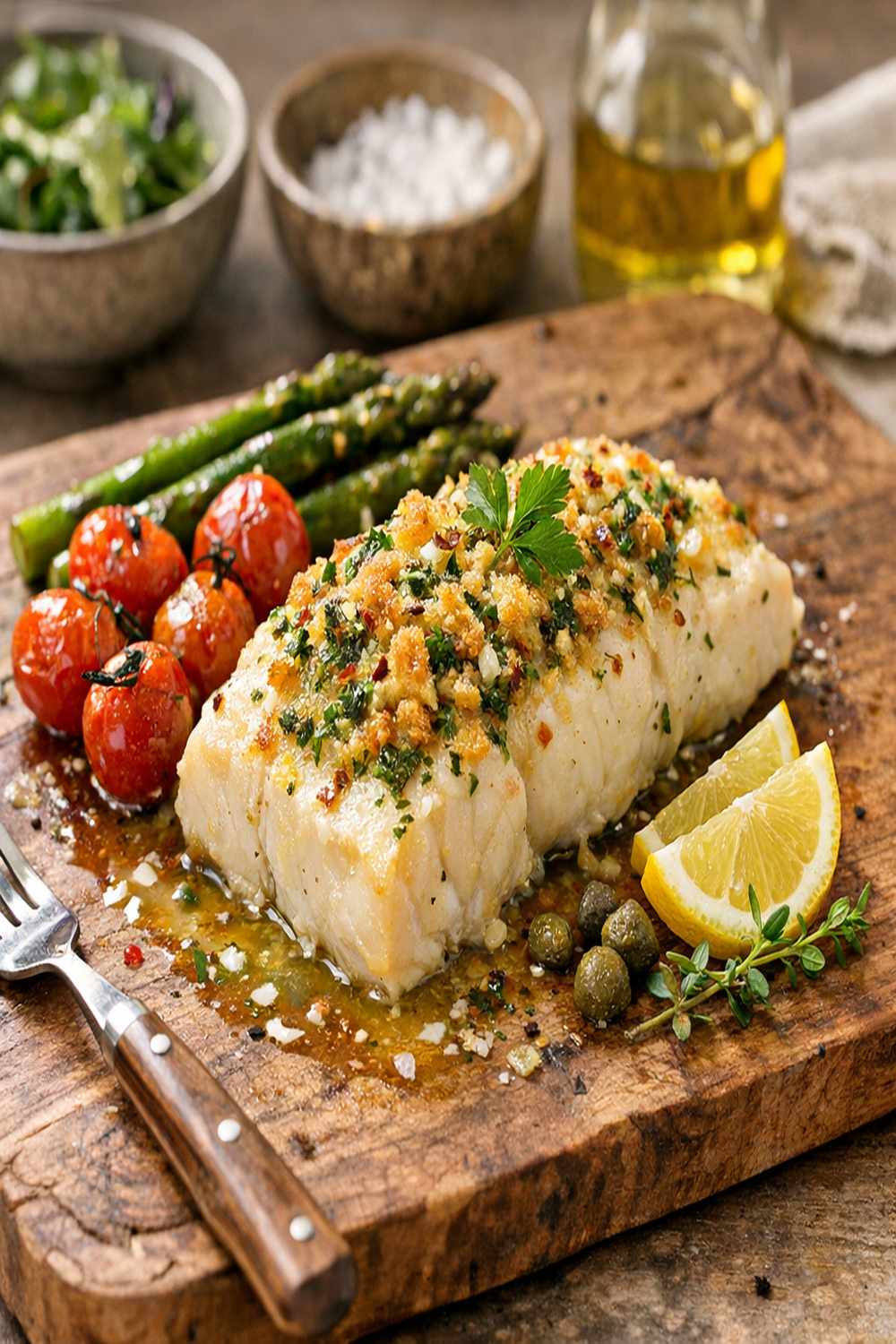

Ingredients
Method
Step 1: Preheat Your Oven and Prep Your Workspace
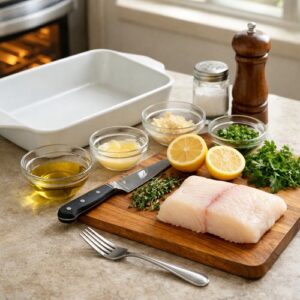
- Turn your oven to 400 degrees Fahrenheit and allow it 10 minutes to fully preheat. This is non-negotiable. An under-heated oven means longer cooking time and a higher risk of drying out your fish. While the oven heats, gather your ingredients and equipment—baking dish, small bowl, fork, and cutting board—within arm's reach. This is called mise en place, a French culinary term meaning "everything in its place." It sounds fancy, but it really just means you won't be scrambling mid-recipe.
Step 2: Pat Your Halibut Dry and Position It Properly
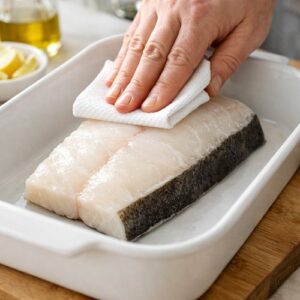
- Remove your halibut from the refrigerator and gently pat both sides completely dry with a paper towel. This step is critical and often overlooked. Moisture on the surface prevents proper browning and can trap steam, making the fish rubbery instead of tender. Place your dried fillet skin-side down in a baking dish just large enough to fit it (an 8x11-inch dish is ideal). If your pieces are thick, don't worry—they'll cook evenly because you'll rely on oven temperature, not pan-searing.
Step 3: Create Your Flavor Base
- In a small bowl, combine your melted butter, minced fresh garlic, paprika, sea salt, black pepper, and fresh thyme if using. Stir this gently with a fork until the spices are distributed evenly—you should see flecks of paprika throughout the butter. This is your flavor foundation. If you're adding the optional white wine or broth, stir it in now. The acid from wine brightens the fish; the broth adds umami depth. Both work beautifully.

Step 4: Apply Your Butter Mixture Strategically
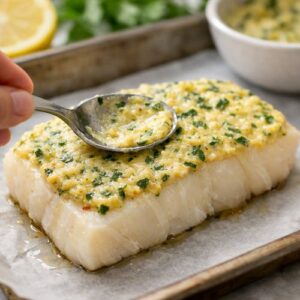
- Pour your butter mixture evenly over the halibut fillet, making sure you coat the top surface completely. Use the back of a spoon to gently spread it if needed. Don't pour it into the baking dish around the fish—you want it on top of the protein where it will season and baste. This is the moment where your $9 meal starts to smell like a $35 restaurant entree.
Step 5: Bake Until Opaque and Flaky
- Place your baking dish in the preheated oven. Set a timer for 12 minutes and check for doneness at that mark. The halibut is perfectly cooked when it's opaque throughout and flakes gently when pressed with a fork. If you're cooking thinner pieces (½ inch), 11 minutes may be sufficient. Thicker pieces (1 inch) may need 14–15 minutes. The USDA recommends cooking fish to an internal temperature of 145 degrees Fahrenheit, but honestly, visual cues are more reliable here. Overcooked fish tastes like gym socks. Undercooked tastes like the sea in the best way.
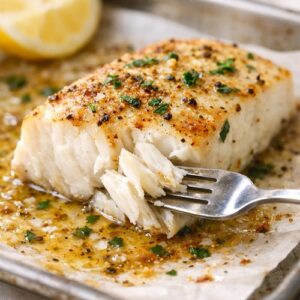
Step 6: Finish With Fresh Brightness
- Remove your halibut from the oven—be careful; the baking dish is hot. Arrange fresh lemon slices over the top of each fillet and scatter chopped parsley across the plate. The heat from the fish will gently warm the lemon, making its oils aromatic. The parsley adds a fresh, clean note that cuts through the richness of the butter. This is where the dish goes from good to memorable.

Notes
- Buy halibut on sale days (usually Wednesday or Thursday at most grocers) - Sign up for your store's digital coupon program. Many supermarkets offer $2–3 off per pound on seafood during promotional weeks. A 1-pound fillet typically costs $8–10 on sale versus $12–14 regular price.
- Frozen halibut works beautifully and costs 20–30% less - Thaw it in the refrigerator overnight (not on the counter). Frozen fish is often flash-frozen at peak freshness within hours of catching, so quality is excellent. This is where I splurge less and nobody notices the difference.
- Buy fresh herbs in bunches, not those tiny plastic containers - A bunch of parsley at the farmer's market or produce section costs $1–1.50 and provides enough for this recipe plus salads, soups, and garnishes for a full week. Freeze extras in ice cube trays with a bit of water for later use.
- Ask the fishmonger to portion your halibut for you - Many markets will cut it into 4-ounce fillets at no charge. This saves time and ensures even cooking.