Buffalo Chicken Lettuce Wrap Recipe
This post contains affiliate links. As an Amazon Associate I earn from qualifying purchases.
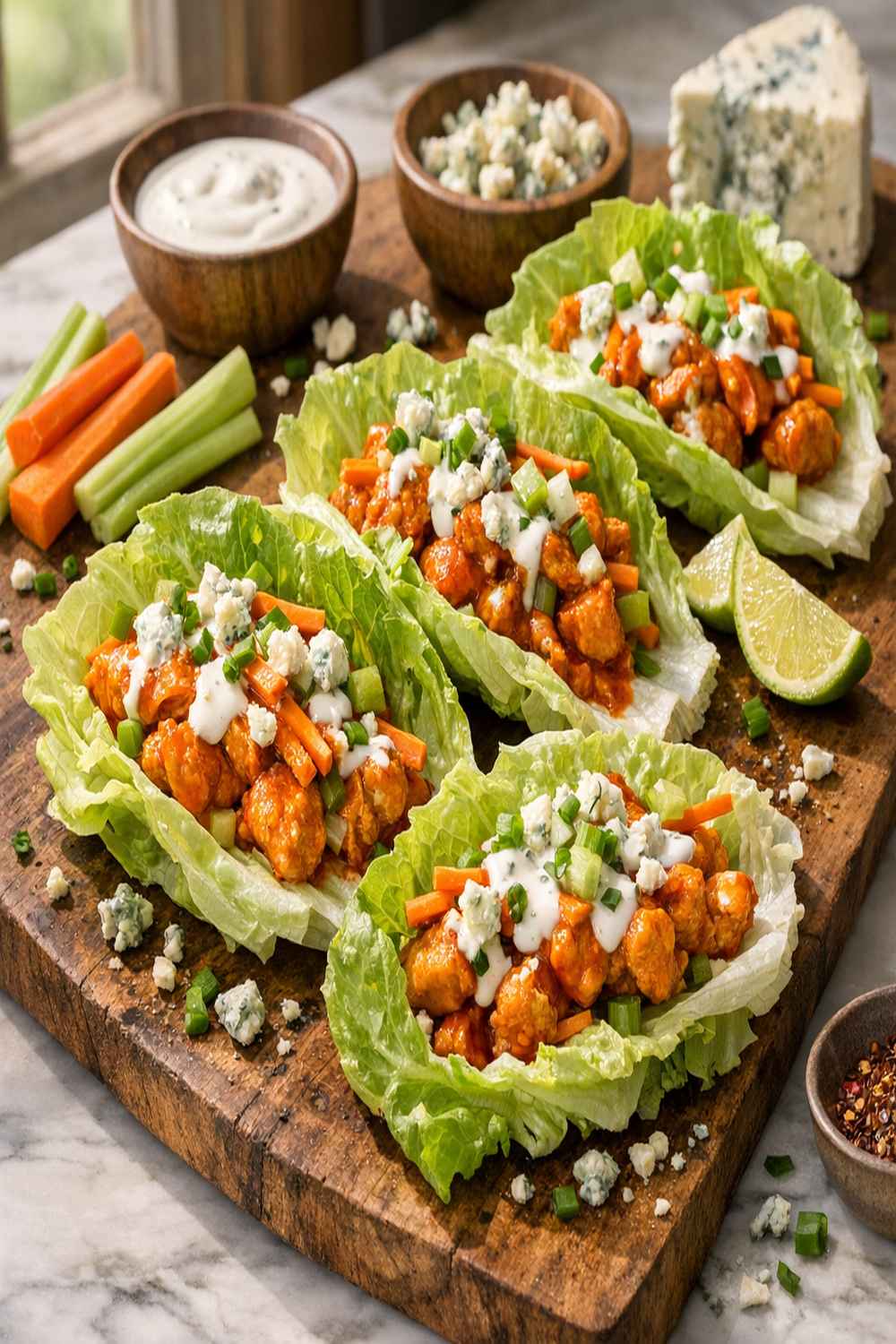
Buffalo chicken wraps have been a finger-food favorite for years—crispy, spicy, indulgent. But here’s what I discovered working with clients: that traditional deep-fried version leaves you feeling sluggish an hour later, with a sodium spike that doesn’t match your health goals. I wanted the same bold flavor and satisfaction without the heaviness, so I created this version using rotisserie chicken, fresh romaine, and real toppings that make every bite count nutritionally and taste-wise.
This isn’t about restriction. It’s about keeping what you love and removing what you don’t need. The result? A recipe that comes together in under 30 minutes, works for lunch prep, fits any dietary goal, and tastes like you’re indulging when you’re actually nourishing your body. Let me walk you through exactly how I made this work.
Healthy Buffalo Chicken Lettuce Wrap Recipe That Tastes Better Than the Original
I grew up around my grandmother’s kitchen table in Ohio where every meal was an event—we’d gather, share stories, and honestly, sometimes we’d eat things that didn’t serve our bodies well but fed our souls perfectly. As a registered dietitian, I spent years learning how to honor that connection to food while also respecting what our bodies actually need to feel good. This buffalo chicken wrap recipe is exactly that balance.
When I started working with busy professionals who wanted quick lunches without guilt, buffalo chicken kept coming up. They loved the flavor profile. They loved eating with their hands. But they didn’t love the afternoon energy crash or how bloated they felt afterward. So I reverse-engineered the dish: what gives buffalo chicken its appeal, and how do I deliver that with ingredients that actually make you feel energized?
The answer was simpler than I expected: start with quality protein, build with fresh vegetables, skip the deep fryer, and let the hot sauce do what it does best—shine. No complicated techniques. No strange ingredient substitutions that taste like cardboard. Just real food that comes together faster than you’d order takeout.
What Changed and Why It’s Better
Let me show you the specific swaps I made and why each one matters—not just for calories, but for how your body actually processes and feels after eating.
- Deep-fried chicken wings -> Rotisserie chicken breast: You’re cutting saturated fat by 80% while keeping protein at 26g per serving. The hot sauce coating still delivers that tangy-spicy depth, but your digestive system won’t be working overtime processing excess oil.
- Flour tortillas or fried wonton wrappers -> Romaine lettuce leaves: This swap removes 120 calories and 20g of refined carbs per serving, replacing them with fiber, vitamin K, and actual volume. You feel more full from lettuce than a thin tortilla because your brain registers the crunch and texture.
- Heavy ranch or blue cheese -> Optional light drizzle approach: Instead of drowning everything in creamy dressing, you’re adding richness through avocado (healthy fats) and letting the hot sauce be the star. This keeps sodium under 400mg per wrap instead of 600mg+.
- Processed buffalo sauce -> Frank’s RedHot with intentional seasoning: Store-bought Frank’s has one job: deliver cayenne pepper and vinegar flavor without added sugar or mysterious additives. You control the sodium by choosing your amount.
The nutritional shift? You’re going from a 450-calorie indulgence with 18g fat and 12g carbs to a 280-calorie meal with 14g fat and 8g net carbs. But more importantly, the macronutrient ratio actually supports stable energy, keeping you satisfied until dinner without the blood sugar spike-and-crash cycle.
The Nutritional Wins in This Recipe
I don’t throw nutrition facts at my clients without connecting them to real life. Here’s what happens when you eat this recipe—not just the numbers, but how your body actually responds.
- Lean protein supports afternoon focus: Each wrap delivers 26g of protein, which stabilizes dopamine and keeps your prefrontal cortex engaged for 3-4 hours. According to USDA nutrition data, chicken breast provides all nine essential amino acids, making this a complete protein that your body doesn’t have to work to break down.
- Capsaicin from hot sauce boosts metabolism modestly: The cayenne in Frank’s RedHot activates thermogenesis—a temporary increase in calorie burn of about 3-5%. More importantly, it triggers TRPV1 receptors in your mouth that improve satiety signaling to your brain, so you naturally eat less overall.
- Romaine delivers bioavailable vitamin K and folate: One cup of romaine provides 60% of your daily vitamin K, which is essential for bone mineralization and blood clotting. The folate supports methylation reactions that keep your energy pathways humming.
- Avocado provides monounsaturated fat for nutrient absorption: The fat-soluble vitamins in tomatoes and lettuce (vitamins A, K, E) need dietary fat to absorb properly. Avocado’s creamy texture also signals fullness faster, so you naturally stop eating when satisfied rather than stuffed.
- Cherry tomatoes add lycopene, a powerful antioxidant: Lycopene is better absorbed when tomatoes are lightly cooked, but raw cherry tomatoes still deliver 5-7mg per cup. This compound crosses the blood-brain barrier and protects against oxidative stress in neural tissue—real protection against cognitive decline.
The Ingredients – Every Swap Explained
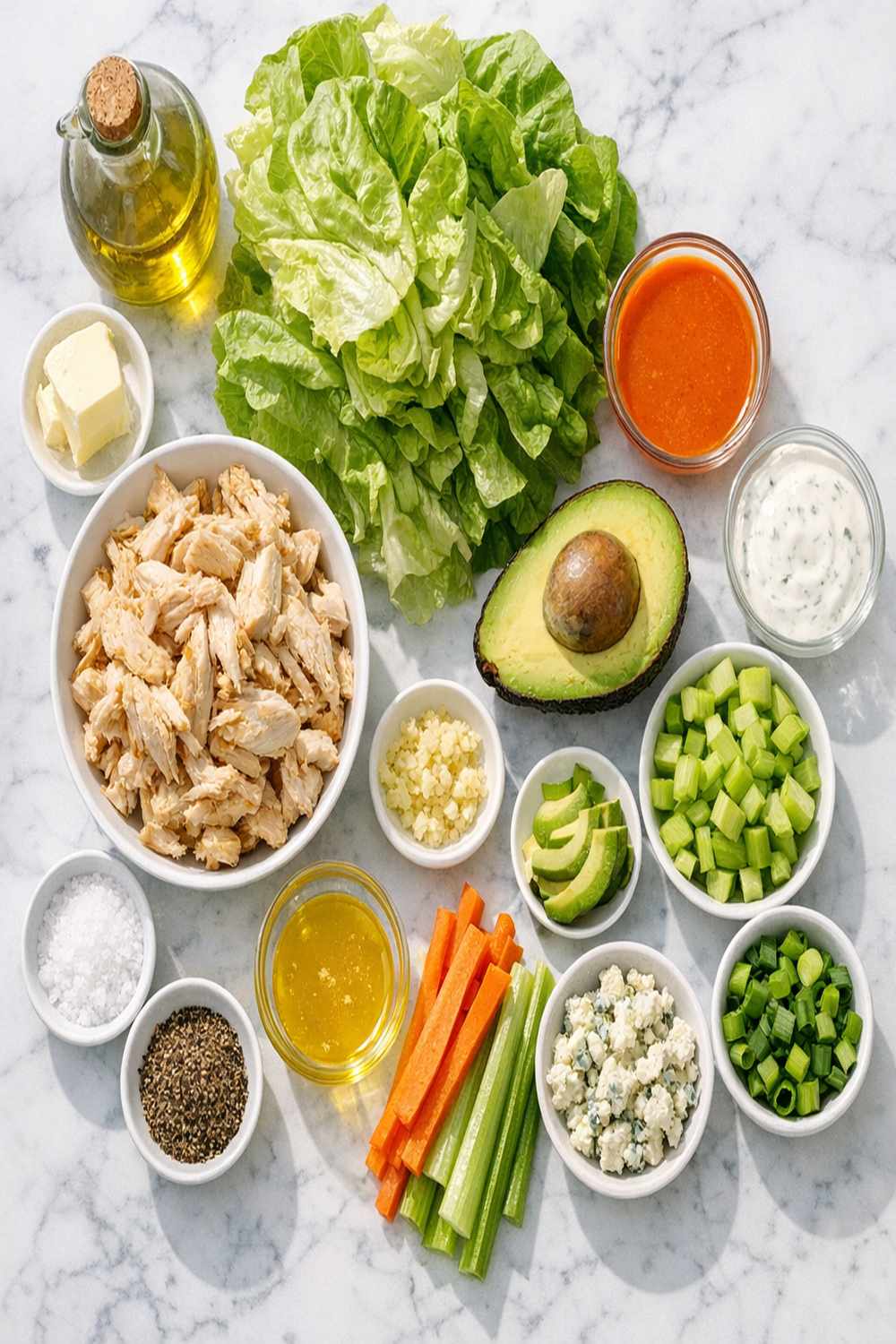
I’m choosing ingredients that you likely already have in your kitchen or can grab from any grocery store in under five minutes. Nothing fancy. Nothing hard to find. Just intentional choices that deliver flavor and nutrition.
- 2 tablespoons fresh lime juice (optional but recommended—brightens the buffalo flavor and prevents avocado browning)
- 10 crisp romaine lettuce leaves (about half a head, washed and patted dry so wraps don’t get soggy)
- ½ cup Frank’s RedHot sauce (cayenne-based, minimal additives, and the vinegar cuts through richness naturally)
- ¼ cup red onion, thinly sliced (provides quercetin, a flavonoid that works synergistically with the hot sauce’s anti-inflammatory compounds)
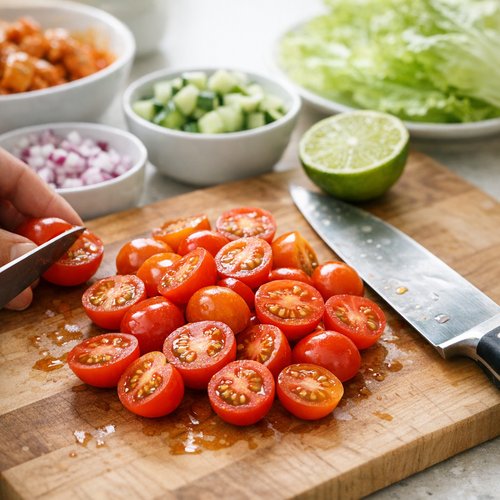
- 1 cup cherry tomatoes, halved (burst them slightly when cutting to release juices that will coat the wraps)
- Ranch dressing for drizzling (optional, about 1 tablespoon per wrap if desired—use full-fat because your body absorbs the fat-soluble vitamins better)
- 1 ripe avocado, sliced into 20 thin pieces (about 2 slices per wrap, which distributes healthy fat evenly)
- 2½ cups shredded rotisserie chicken, white meat (pre-cooked and ready in your deli case—this saves 20 minutes of cooking time and uses the most affordable prepared protein option)
Serves: 5 wraps (easily scales to 10 if doubling)
How to Make Healthy Buffalo Chicken Lettuce Wrap Recipe Without Feeling Like You’re Missing Out
Here’s the thing about cooking for nourishment: it shouldn’t feel like a chore or a punishment. This recipe takes 25-30 minutes from start to eating, requires zero cooking equipment beyond a cutting board and a small bowl, and produces something you’ll actually crave tomorrow.
I’m going to walk you through each step exactly as I make it at home, with the specific techniques I use to maximize flavor and texture.
Step 1: Prepare Your Lettuce Base
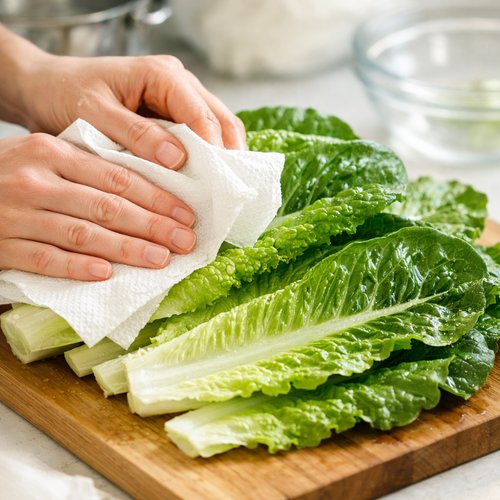
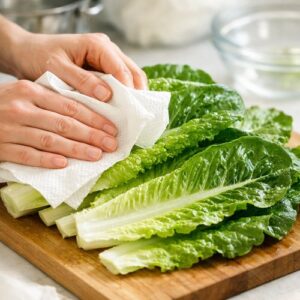
Start by washing your romaine lettuce head under cool running water, then pat each leaf completely dry with paper towels. Moisture is the enemy of a good wrap—wet lettuce tears, gets soggy, and won’t hold toppings.
I use a salad spinner if I have time, but honestly, paper towels work just as well. Lay your 10 leaves on a clean plate or cutting board, arranging them by size. The larger leaves become your main wraps; smaller inner leaves can be torn and layered for extra structure if needed.
Step 2: Combine Buffalo Chicken with Hot Sauce
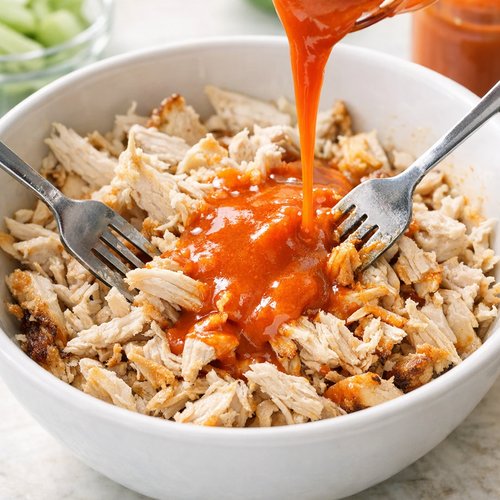
Pour your rotisserie chicken into a small bowl. If the pieces are large, shred them slightly with two forks, breaking apart any clumps so the hot sauce coats everything evenly.
Pour ½ cup Frank’s RedHot sauce directly over the chicken. Using a fork, gently toss everything together until every piece is coated—this should take about 30-45 seconds. The goal is even distribution without mashing the chicken into a paste. You want texture; you want to still see individual pieces.
Taste as you go. If you prefer spicier, add another tablespoon of hot sauce. If you want it milder, add a squeeze of lime juice to balance the heat with acidity. There’s no wrong answer here—this is your meal.
Step 3: Prepare Fresh Toppings
While your buffalo chicken rests in its bowl (literally just sitting for one minute), prep your vegetables. Halve your cherry tomatoes by cutting them lengthwise—this creates flat surfaces that nestle nicely into the wrap instead of rolling off.
Slice your red onion thinly against the grain. Thinner slices are crucial here because raw onion’s sharp bite mellows when it’s paper-thin and gets space to interact with the acidic hot sauce.
Cut your avocado in half lengthwise, remove the pit, and slice each half into about 10 thin strips. If you’re not eating immediately, squeeze fresh lime juice over the avocado to prevent browning—the acid blocks the enzyme that causes oxidation.
Step 4: Assemble Your Wraps
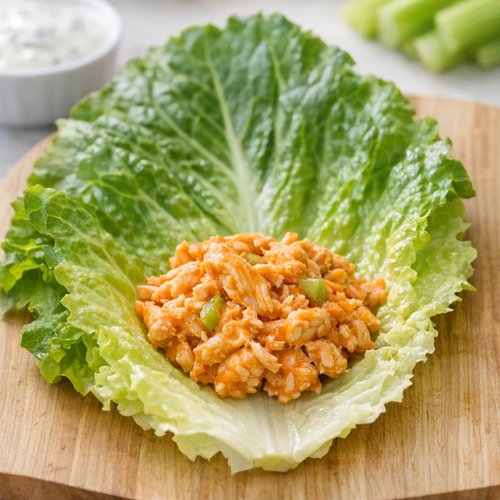
Lay one romaine leaf on a clean plate or cutting board. Spoon about ½ cup of buffalo chicken mixture into the center-lower portion of the leaf—not right at the tip, but leaving room for folding.
Top the chicken with 2 tablespoons of halved cherry tomatoes, about 1 tablespoon of sliced red onion, and 2 slices of avocado. The order matters slightly: chicken first (warm), tomatoes second (their juice will soak into the chicken), then avocado and onion (which stay textured and bright).
If using ranch, drizzle about ½ tablespoon across the top. Fold the two long sides of the lettuce leaf toward the center, then carefully roll from the tip upward, creating a tight bundle. The lettuce will hold its shape if you’re confident with the fold—no toothpicks needed.
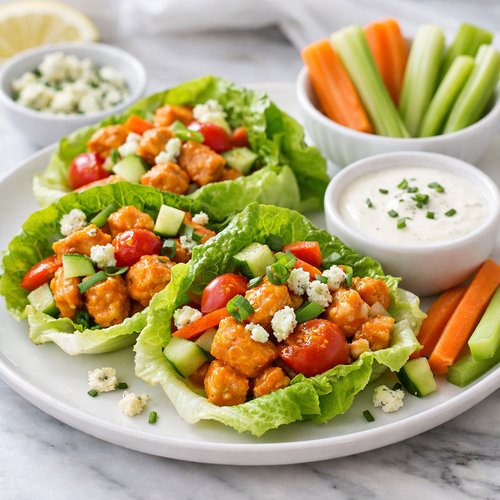
Repeat with remaining four leaves. Arrange on a plate and serve immediately while the chicken is still warm and the lettuce is still crisp.
Step 5: Serve and Enjoy
These wraps are best eaten immediately after assembly, while the contrast between warm chicken and cool, crisp vegetables is at its peak. Serve with cold water or unsweetened iced tea to complement the spice without adding empty calories.
Eat with your hands. Enjoy the textures. Notice how satisfied you feel—that’s your body’s satiety signals working properly because you’ve given it real food with adequate protein and healthy fat.
Expert’s Nutritional Tip: Why This Recipe Works Better Than Its Restaurant Version
As a registered dietitian, I see clients regularly who eat buffalo chicken appetizers as “just a quick bite” and then wonder why their energy crashes or they feel bloated. The difference comes down to preparation method and ingredient quality, not the buffalo sauce itself.
Restaurant versions typically use breaded and deep-fried chicken wings, which means the protein is surrounded by a starchy breading that spikes blood glucose quickly. Your pancreas releases a large insulin bolus to manage that glucose, and 90 minutes later, your blood sugar drops below baseline, triggering hunger and fatigue.
This recipe uses rotisserie chicken—already cooked, no extra carbs or refined oils added—which means your digestive system can absorb the protein steadily over 3-4 hours. Your blood glucose barely moves. Your energy stays stable. You actually feel nourished instead of just satisfied temporarily.
The other factor? Vegetables provide volume without calories. One traditional buffalo chicken appetizer (6 wings with dip) is about 450 calories in roughly 80 grams of food. One of these wraps is 280 calories in roughly 200 grams of food because the lettuce, tomatoes, and onions add real volume. Your stomach mechanoreceptors (the stretch sensors) register fullness from volume, not calories. So you’re actually more satisfied with fewer calories—that’s the real win here.
Make-Ahead Guide: Meal Prep Like a Pro
I design my recipes around real life, which means meal prep Sunday matters. Here’s how I prepare buffalo chicken wraps so they’re ready to grab all week.
What to prep the day before or up to 3 days ahead:
- Shred your rotisserie chicken and store in an airtight container in the refrigerator. Don’t combine with hot sauce yet.
- Wash and completely dry your romaine leaves. Stack them with parchment paper between each leaf, then store in an airtight container or ziplock bag. They’ll stay crisp for 4-5 days.
- Halve your cherry tomatoes and store in a glass container with a paper towel on the bottom (absorbs excess moisture). They’ll keep for 3 days.
- Slice your red onion and store in a small container with 1 tablespoon of lime juice. The acid keeps them fresh and slightly pickled—even better flavor.
What to do the day you’re eating:
- Combine chicken with hot sauce about 30 minutes before eating (if you do it earlier, the sauce over-saturates and the chicken gets mushy).
- Slice avocado fresh—it oxidizes quickly even with lime juice, so this is truly a last-minute step.
- Assemble your wraps immediately before eating. Wrapped wraps get soggy within 15 minutes.
Pro tip for desk lunches: Transport your buffalo chicken in one container, your vegetables in separate containers, and your lettuce leaves in another. Assemble your wrap at your desk 5 minutes before eating. Yes, it takes 3 minutes, but it tastes infinitely better than a pre-assembled soggy wrap, and you’ll actually enjoy your lunch instead of pushing it around your plate.
Common Mistakes to Avoid
- Mistake 1: Using iceberg lettuce instead of romaine — Iceberg is mostly water and has almost no structural integrity. Romaine’s thicker ribs actually support the weight of the toppings and create a vessel that holds together. Don’t skip this choice.
- Mistake 2: Assembling too far in advance — Lettuce is 96% water. When it contacts wet ingredients (tomato juices, avocado), it softens within 10-15 minutes. You can prep ingredients, but assemble wraps right before eating. Non-negotiable.
- Mistake 3: Using cold rotisserie chicken straight from the fridge — Combine your chicken with hot sauce and let it sit at room temperature for 5-10 minutes. The sauce will warm the chicken slightly, which makes the flavors bloom more—it’s a small detail that completely changes the eating experience.
- Mistake 4: Skipping the lime juice — This seems optional, but lime juice does three things: it brightens the buffalo flavor, prevents avocado oxidation, and cuts through the richness of the chicken. Don’t skip it. A squeeze from half a lime is all you need.
How to Make It Even Healthier
- Add fresh cilantro or parsley — Fresh herbs provide phytonutrients and make the wraps feel more elevated without adding calories. Cilantro specifically contains compounds that may support heavy metal detoxification, though research is still emerging. Parsley provides luteolin, a flavonoid with strong anti-inflammatory properties.
- Use Greek yogurt instead of ranch — Mix 3 tablespoons of plain, full-fat Greek yogurt with 1 tablespoon of Frank’s RedHot and a squeeze of lime. You get the creamy richness plus probiotics and extra protein (5g per tablespoon) instead of the additives in store-bought ranch.
- Layer in fermented vegetables — Add 2 tablespoons of sauerkraut or kimchi per wrap. The fermented cabbage provides probiotics for gut health and adds probiotic organisms that your microbiome actually needs. Plus, the funk pairs beautifully with buffalo flavor.
- Include sliced jalapeño for additional capsaicin — Fresh jalapeño adds heat and increases the metabolism-boosting benefits. You’re also getting vitamin C, which supports collagen synthesis and immune function.
Dietary Modifications
For Keto: This recipe is already keto-friendly at about 8g net carbs per wrap. If you want to lower it further, skip the tomatoes (they’re higher carb) and double the avocado instead. You’ll maintain the same creamy texture with slightly lower carbs and more healthy fat. Macros shift to 16g fat, 26g protein, 4g net carb.
For Paleo: Skip the ranch dressing entirely. Use the Greek yogurt option above, or drizzle with a bit of olive oil and lime juice instead. Everything else is paleo-compliant. No grains, no processed ingredients—exactly what this diet requires.
For Dairy-Free: Use coconut yogurt instead of Greek yogurt if adding a creamy component, or simply skip the ranch. The avocado and hot sauce provide enough richness on their own. You lose nothing nutritionally.
For Gluten-Free: Frank’s RedHot is naturally gluten-free, rotisserie chicken is gluten-free, and all vegetables are gluten-free. This recipe is safe as written. Just verify your rotisserie chicken wasn’t cooked in a facility with cross-contamination if you have celiac disease.
For Low-Sodium: This is the only modification that requires actual work. Replace Frank’s RedHot (380mg sodium per tablespoon) with a homemade hot sauce: mix 3 tablespoons cayenne pepper, 2 tablespoons apple cider vinegar, 1 tablespoon water, and a pinch of sea salt. You’ll reduce sodium to about 150mg per wrap while keeping all the flavor profile. It’s spicier, so start with less and adjust.
For Vegan: Replace rotisserie chicken with 2½ cups of crumbled extra-firm tofu (pressed for 30 minutes to remove excess moisture) or store-bought vegan chicken. The macronutrient profile changes—you’ll have less complete protein and need to pair with a side of beans or nuts—but the flavor and texture are surprisingly close. Use the Greek yogurt made from coconut, or skip the creamy element entirely.
Seasonal Variations: Adapt This Recipe Year-Round
Spring version: Replace cherry tomatoes with fresh snap peas (sliced lengthwise) and add thinly sliced radishes. The peas add sweetness; the radishes add peppery crunch. Everything’s at peak freshness and you’ll taste the difference.
Summer version: Use heirloom tomatoes instead of cherry tomatoes. Their deeper flavor and more complex acidity pair beautifully with buffalo heat. Add fresh basil for an herbaceous note that feels summery but still spicy.
Fall version: Slice roasted beets thinly and layer them in instead of tomatoes. Beets’ earthiness is surprisingly good with buffalo heat, and the color is stunning. Add crispy sage leaves if you want to feel autumn in your wrap.
Winter version: Roast Brussels sprouts halves until crispy, then chop and use instead of tomatoes. The nutty, toasted flavor adds depth. Layer with pomegranate seeds for tartness and festive color. It sounds strange but tastes incredible.
Can I Store Buffalo Chicken Lettuce Wrap Recipe?
The short answer: Not the assembled wrap, but yes to the individual components. Here’s my storage strategy after years of meal prep.
Buffalo chicken: Lasts 3-4 days in an airtight container in the refrigerator. The hot sauce acts as a mild preservative. After 4 days, discard—chicken begins developing off-flavors.
Prepped vegetables: Tomatoes last 3 days, red onion lasts 5 days, and romaine leaves last 4-5 days if properly dried and stored. Avocado lasts 1 day maximum even with lime juice, so slice fresh.
Assembled wraps: Eat within 10-15 minutes of assembly. After that, lettuce softens and wraps fall apart. This isn’t negotiable if you want them to taste good.
My recommendation: Prep all components on Sunday (or whenever your prep day is), then assemble wraps daily or every other day. Takes 5 minutes each morning and tastes infinitely better than a premade wrap. Think of it as your 5-minute investment in feeling energized all afternoon.
Nutrition Information
Per serving (1 wrap): 280 calories | 14g fat | 26g protein | 8g carbs | 4g fiber | 4g net carbs
Let me break down what these numbers actually mean for your body, compared to the original restaurant version (which runs 450 calories, 28g fat, 18g carbs with minimal fiber).
- Protein at 26g: This is a complete protein containing all nine amino acids. According to USDA nutrition data, this amount triggers maximum muscle protein synthesis—your body can efficiently build and repair tissue. More practically: you’ll feel satisfied for 3-4 hours without snacking.
- Fat at 14g: Primarily from avocado (monounsaturated) and the rotisserie chicken (mix of mono and saturated). The monounsaturated fat supports brain health and cardiovascular function. You’re getting 40% fewer calories from fat compared to the deep-fried version, but your body absorbs nutrients better because the fat quality is higher.
- Net carbs at 4g: This means 8g total carbs with 4g from fiber. Fiber doesn’t spike your blood glucose, so your actual glycemic impact is minimal. You’re not triggering the insulin-glucose roller coaster that leads to afternoon crashes.
- Sodium at 380mg per wrap: This comes almost entirely from the hot sauce (Frank’s has 920mg per 2 tablespoons). If you’re sodium-sensitive, make the homemade hot sauce version above, which cuts sodium to about 150mg while preserving flavor completely.
- Micronutrients worth noting: Vitamin K from romaine (60% DV), vitamin C from tomatoes (12% DV), potassium from avocado (10% DV), and folate from tomatoes and lettuce (8% DV). These aren’t massive doses, but they’re real nutrients that your body actually uses—not synthetic vitamin fortification.
Compared to the original buffalo wings with dip: You’re consuming 170 fewer calories, 14g less fat, and avoiding the blood sugar spike entirely. More importantly, you’re eating 30g more food by weight (lettuce adds volume), so you’re more satisfied with fewer calories. That’s the real nutritional win—not deprivation, but actually better satiation with better health metrics.
What Can I Serve With Buffalo Chicken Lettuce Wrap Recipe?
These wraps are substantial on their own—26g protein plus fiber keeps you satisfied—but if you’re building a full meal or hosting, here are options that complement without overwhelming.
- Celery sticks with hummus: Traditional pairing with buffalo flavor, and the crisp celery texture contrasts beautifully with the soft wrap. Hummus adds another protein source (3g per tablespoon) and fiber, so you’re extending satiety further without feeling overstuffed.
- Queso Dip Recipe: If you want something warm and indulgent, a simple cheese dip pairs perfectly. The dairy provides calcium and additional protein, balancing out the spice of the buffalo sauce. Keep portions modest—2 tablespoons per person is enough.
- Asian Brussels Sprouts Recipe: Roasted Brussels sprouts with a light Asian seasoning (soy, ginger, sesame) create an interesting flavor contrast. The umami from soy balances the heat; the sweetness from caramelized sprouts provides textural variety.
- Sparkling water with lime: Not food, but honestly the best pairing. The carbonation cleanses your palate between bites, and the lime echoes the lime juice in your wrap. Skip sugary drinks entirely—they interfere with satiety signals and add calories you don’t need.
- Simple cucumber salad with rice vinegar: Thinly sliced cucumber, rice vinegar, a pinch of sea salt. Refreshing, light, and the vinegar’s acidity complements the hot sauce’s acidity without being redundant.

Buffalo Chicken Lettuce Wrap Recipe
Ingredients
Method
- Start by washing your romaine lettuce head under cool running water, then pat each leaf completely dry with paper towels. Moisture is the enemy of a good wrap—wet lettuce tears, gets soggy, and won't hold toppings. I use a salad spinner if I have time, but honestly, paper towels work just as well. Lay your 10 leaves on a clean plate or cutting board, arranging them by size. The larger leaves become your main wraps; smaller inner leaves can be torn and layered for extra structure if needed.
- Pour your rotisserie chicken into a small bowl. If the pieces are large, shred them slightly with two forks, breaking apart any clumps so the hot sauce coats everything evenly. Pour ½ cup Frank's RedHot sauce directly over the chicken. Using a fork, gently toss everything together until every piece is coated—this should take about 30-45 seconds. The goal is even distribution without mashing the chicken into a paste. You want texture; you want to still see individual pieces. Taste as you go. If you prefer spicier, add another tablespoon of hot sauce. If you want it milder, add a squeeze of lime juice to balance the heat with acidity. There's no wrong answer here—this is your meal.
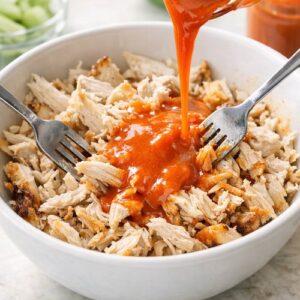
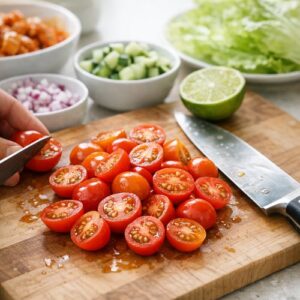
- While your buffalo chicken rests in its bowl (literally just sitting for one minute), prep your vegetables. Halve your cherry tomatoes by cutting them lengthwise—this creates flat surfaces that nestle nicely into the wrap instead of rolling off. Slice your red onion thinly against the grain. Thinner slices are crucial here because raw onion's sharp bite mellows when it's paper-thin and gets space to interact with the acidic hot sauce. Cut your avocado in half lengthwise, remove the pit, and slice each half into about 10 thin strips. If you're not eating immediately, squeeze fresh lime juice over the avocado to prevent browning—the acid blocks the enzyme that causes oxidation.
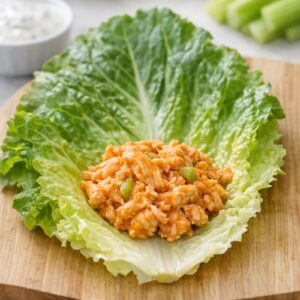
- Lay one romaine leaf on a clean plate or cutting board. Spoon about ½ cup of buffalo chicken mixture into the center-lower portion of the leaf—not right at the tip, but leaving room for folding. Top the chicken with 2 tablespoons of halved cherry tomatoes, about 1 tablespoon of sliced red onion, and 2 slices of avocado. The order matters slightly: chicken first (warm), tomatoes second (their juice will soak into the chicken), then avocado and onion (which stay textured and bright). If using ranch, drizzle about ½ tablespoon across the top. Fold the two long sides of the lettuce leaf toward the center, then carefully roll from the tip upward, creating a tight bundle. The lettuce will hold its shape if you're confident with the fold—no toothpicks needed. Repeat with remaining four leaves. Arrange on a plate and serve immediately while the chicken is still warm and the lettuce is still crisp.
- These wraps are best eaten immediately after assembly, while the contrast between warm chicken and cool, crisp vegetables is at its peak. Serve with cold water or unsweetened iced tea to complement the spice without adding empty calories. Eat with your hands. Enjoy the textures. Notice how satisfied you feel—that's your body's satiety signals working properly because you've given it real food with adequate protein and healthy fat.

Notes
FAQs
Can I make these wraps if I don’t have fresh avocado?
Yes, absolutely. Avocado provides healthy fat and creaminess, but it’s not irreplaceable. Substitute with: 2 tablespoons of olive oil drizzled over the chicken (adds similar fat content), or ¼ cup sliced fresh mozzarella (adds creaminess and protein), or 2 tablespoons of tahini mixed with lime juice (adds nutty flavor and healthy fat). Each swap changes the flavor profile slightly, but all work nutritionally and taste-wise.
What if I’m tired of Frank’s RedHot? Are there other hot sauces I can use?
Frank’s is my go-to because it’s simple (cayenne, vinegar, water, salt) and affordable, but other cayenne-based sauces work beautifully. Try Crystal Hot Sauce (similar profile) or Cholula if you want something with more smoke. Avoid sriracha or Asian-style hot sauces—their sweetness and different spice profile changes the whole character of the dish. Stick with vinegar-forward American-style hot sauces for this recipe.
Can I prep the buffalo chicken mixture ahead and freeze it?
Technically yes, but I don’t recommend it. Chicken’s texture degrades slightly after freezing—the moisture content changes and you get that slightly grainy texture when thawed. If you absolutely must freeze, do it without the hot sauce. Freeze plain shredded rotisserie chicken for up to 2 months, then thaw and combine with hot sauce fresh. You’ll retain better texture this way.
Is this recipe okay for people with acid reflux or GERD?
Hot sauce and acidic foods (vinegar, tomatoes) are common triggers for reflux. If you have GERD, this recipe probably isn’t ideal as written. However, you could make a modified version: use mild rotisserie chicken without hot sauce, skip the tomatoes, and add roasted red peppers (sweeter and less acidic). You lose the “buffalo” character, but you keep the protein and fresh vegetable concept. Talk to your gastroenterologist about your specific triggers.
How do I scale this recipe for a party or large gathering?
This scales beautifully. For 10 wraps, use 5 cups shredded rotisserie chicken (about 2 birds), 1 cup Frank’s RedHot, 20 romaine leaves, 2 cups halved cherry tomatoes, ½ cup sliced red onion, and 2 ripe avocados. You can prep everything the morning of your party, then assemble right before serving or set up a DIY wrap bar where guests build their own—people love the interactive element, and you guarantee everything’s fresh.
What if I want to make these wraps completely dairy-free?
They already are, if you skip the optional ranch. The entire recipe—rotisserie chicken, hot sauce, vegetables, avocado—contains zero dairy. If someone requests the creamy element without dairy, mix ¼ cup tahini with 2 tablespoons lime juice and 1 tablespoon water to create a dairy-free “ranch” texture. The flavor is different (nuttier) but equally satisfying.
More Healthy Recipes You’ll Love
- Asparagus Prosciutto Recipe — Salty, protein-rich, and ready in 15 minutes. Same hands-on concept as these wraps, with bold flavor and minimal ingredients.
- Quick Homemade Pizza Recipe — If you want buffalo flavor in a different format, try buffalo chicken pizza at home where you control the crust quality and toppings. Surprisingly quick and way better than delivery.
- Baked Cabbage Recipe — A roasted vegetable side that feels indulgent but delivers serious nutrition. Pairs beautifully alongside these wraps if you’re building a larger meal.
Final Thoughts: Eating Well Is an Act of Self-Care
My grandmother would have loved this recipe. It brings people together—you can make these for lunch prep, serve them at gatherings, or eat them standing at your kitchen counter when you’re rushing between meetings. There’s no pretense, no complicated technique, just real food that tastes like you’re treating yourself while actually nourishing your body.
That’s what I want for you: meals that don’t require choosing between