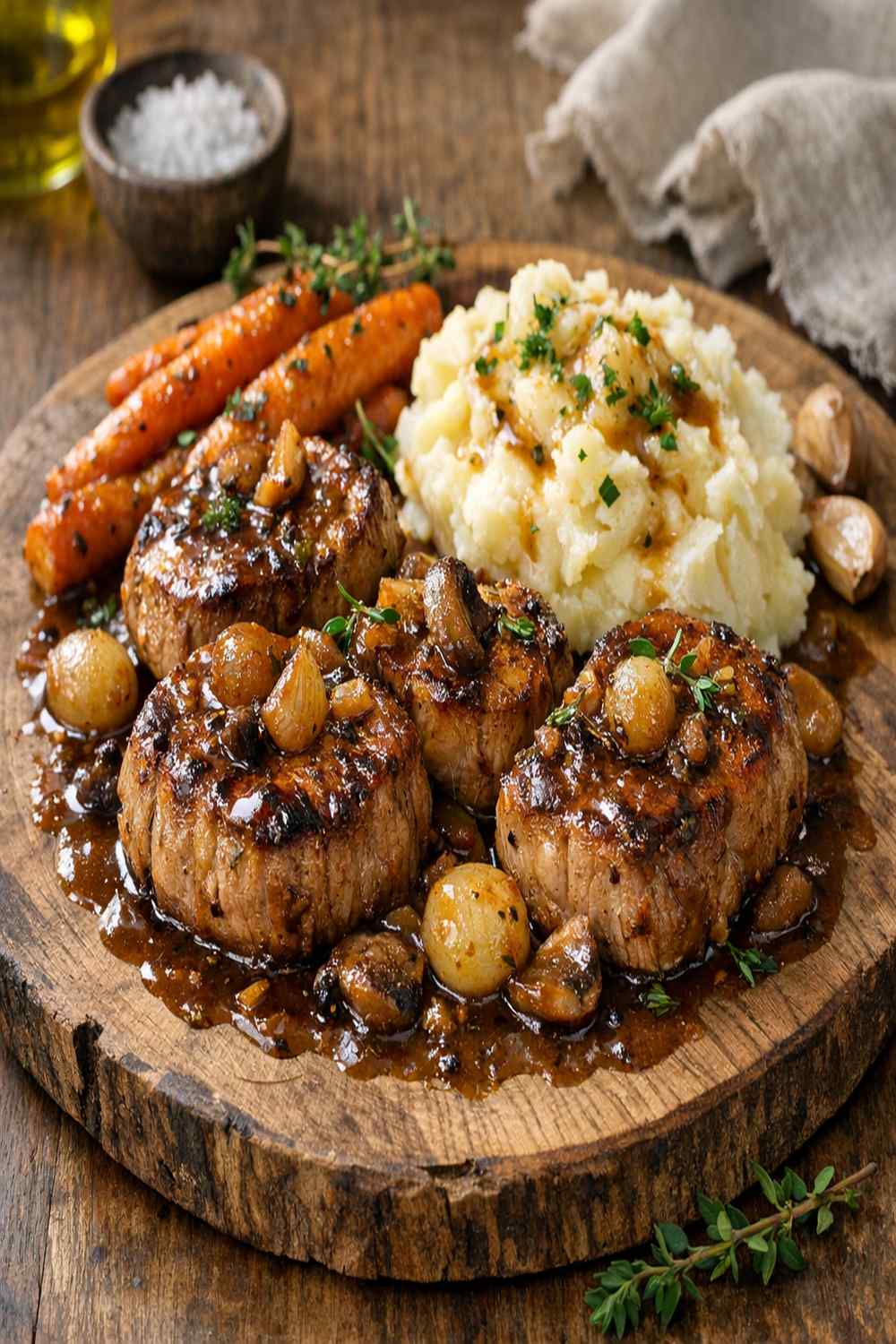

Ingredients
Method
Step 1: Prepare Your Pork
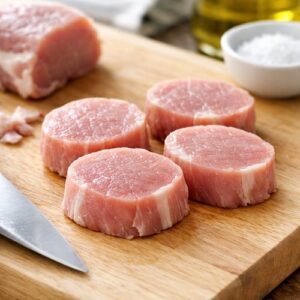
- Trim any visible fat from the pork tenderloin, then slice it crosswise into rounds about 1 inch thick. You should have about 4 medallions. Place each piece between two pieces of parchment paper and gently pound them to an even thickness (about ¾ inch). This helps them cook evenly and stay tender. Pat them dry with paper towels—this is critical for achieving that beautiful golden crust.
Step 2: Season and Dredge
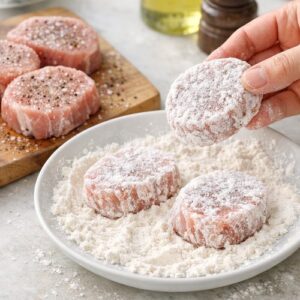
- Season each medallion generously with salt and pepper on both sides. Pour your flour onto a shallow plate and coat each piece lightly, shaking off any excess. Don't skip this step—the flour creates that signature caramelized exterior that makes the sauce taste restaurant-quality.
Step 3: Sear the Pork Until Golden
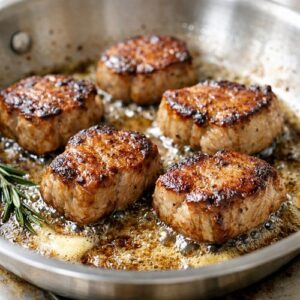
- Heat your skillet over medium-high heat and add the butter and olive oil together. Wait about 1 minute for the pan to get really hot—you'll see a slight shimmer across the surface. Carefully add your pork medallions (you may need to work in two batches if your pan is small). Let them sit undisturbed for about 3 minutes until they're golden brown on the bottom, then flip and cook the other side for another 3 minutes. Remove the pork to a clean plate.
Step 4: Build Your Cream Sauce
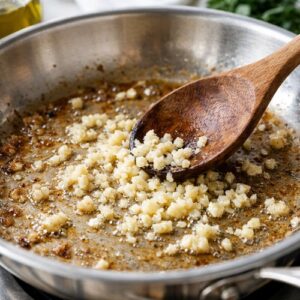
- Reduce heat to medium and add minced garlic to the same skillet. Let it cook for about 30 seconds until it's fragrant—don't let it brown. Stir in the Dijon mustard, then pour in your chicken broth, scraping up all those beautiful brown bits stuck to the bottom of the pan. These bits are pure flavor and shouldn't be wasted. Add your dried herbs and let the mixture bubble gently for about 1 minute. Slowly pour in the cream while stirring constantly, letting it bubble gently for 2 minutes until slightly thickened.
Step 5: Finish and Serve
- Return the pork medallions to the skillet and reduce heat to medium-low. Let everything simmer together for about 5 minutes, turning the pork once halfway through. The pork should reach an internal temperature of 145°F (63°C) on a meat thermometer—slightly pink in the very center is perfect and keeps the meat incredibly tender. Taste the sauce and adjust seasoning with extra salt and pepper if needed. Sprinkle fresh parsley over the top and serve immediately.

Notes
- Skipping the patting dry step - moisture is the enemy of browning. If your pork has any surface moisture, you'll steam instead of sear, and your crust won't develop properly. Always pat dry with paper towels before seasoning.
- Not letting the pan get hot enough - I see cooks add their pork when the butter is still foaming or the oil isn't shimmering yet. You need genuine heat to create that beautiful golden exterior. Wait the full minute and listen for a gentle sizzle when the pork hits the pan.
- Moving the pork too early - resist the urge to flip or move your medallions for a full 3 minutes. Every time you move them, you interrupt the browning process and create a gray, steamed surface instead of golden crust.
- Overcooking the pork - pork tenderloin is lean, so it dries out quickly. Pull it off the heat at 145°F internal temperature. It will be slightly pink in the center and incredibly juicy. Cooking it past that point to "well-done" turns it into shoe leather.