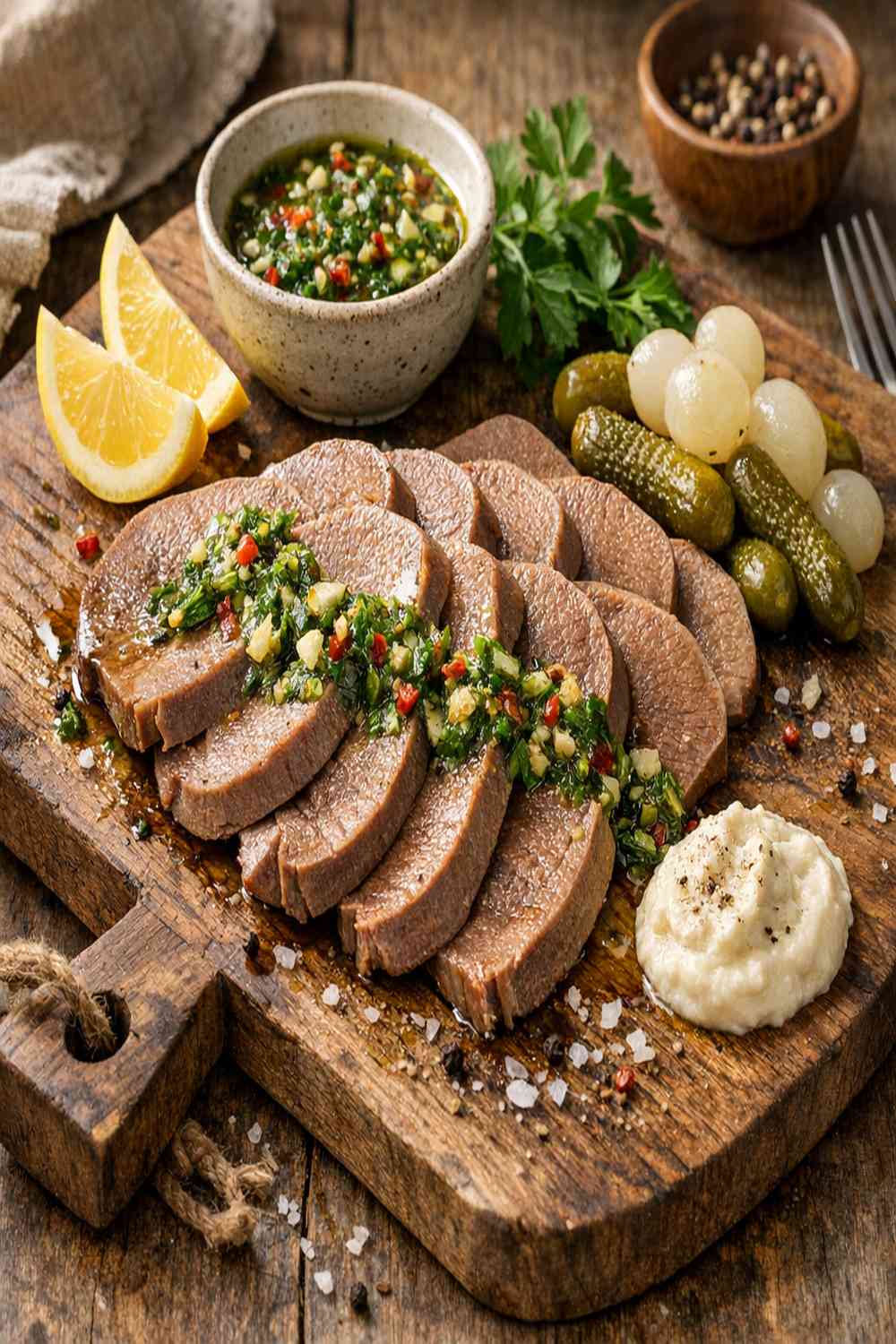

Ingredients
Method
Step 1: Prepare Your Beef Tongue
- Remove your beef tongue from the refrigerator about 15 minutes before cooking—this helps it cook more evenly. Rinse it under cool running water and pat it completely dry with paper towels. This matters because moisture on the surface prevents browning. You might notice some discoloration or a thin membrane on the surface; this is completely normal and will rinse away easily. If there's any visible fat or gristle on the underside, trim it gently with a sharp knife, but don't worry about being perfect here. Fill a large pot or Dutch oven with enough water to cover your tongue by about an inch. Add the bay leaves, whole black peppercorns, and allspice berries to the water. These aromatics are going to gently infuse the cooking liquid without overwhelming the delicate flavor of the tongue itself. Bring the water to a gentle simmer over medium-high heat—you want small bubbles breaking the surface, not a rolling boil, which can make the meat tough.

Step 2: Simmer the Tongue Until Tender
- Once the water reaches a gentle simmer, carefully add your beef tongue. Reduce the heat to medium so the liquid maintains that gentle simmer throughout cooking. This is crucial—rushing this step with high heat will result in tougher meat. Cover the pot partially and let it cook for approximately 2 to 2.5 hours, depending on the size of your tongue. You'll know it's done when a fork pierces the meat easily and there's no resistance. The texture should be completely tender. Some of the outer membrane will naturally slough off during cooking, which is exactly what you want. Once it's done, carefully remove the tongue to a cutting board and let it cool for about 5 minutes until you can handle it comfortably. Here's where the magic happens: while the tongue is still warm, gently peel away the outer layer of skin. It should come off easily in strips, almost like you're undressing the meat. Don't force it—if a section resists, just move on. Once peeled, slice the tongue against the grain into ¼-inch thick pieces. You'll have roughly 1.5 to 2 pounds of usable meat.

Step 3: Build Your Mushroom Sauce Foundation
- While your tongue is simmering, prepare your mushrooms and onions. Slice your mushrooms into ¼-inch thick pieces—not too thin, or they'll disappear into the sauce. Chop your onions into small, bite-sized pieces. Having everything prepped and ready means you can move quickly once it's time to build the sauce, which is the moment when everything comes together beautifully. In a large, heavy skillet or shallow Dutch oven, melt your butter over medium heat. Once it's foaming and smells wonderfully nutty (about 1 minute), add your chopped onions. Stir regularly for about 3 to 4 minutes until they're softened and just beginning to turn golden at the edges. This creates a sweet, caramelized foundation for your sauce. Then add your sliced mushrooms and cook for another 4 to 5 minutes, stirring occasionally, until they release their moisture and begin to turn golden brown.

Step 4: Create the Braising Liquid
- Pour your beef broth into the skillet with the mushrooms and onions. Stir well to combine. If you're using that optional Dijon mustard (and I recommend it), whisk it in now—it adds a subtle tangy depth that makes people ask what the secret ingredient is. Bring the mixture to a gentle simmer. Taste the broth and season with your teaspoon of kosher salt and ½ teaspoon of freshly ground pepper. Remember, you're building a balanced sauce that will coat your tender beef tongue, so season thoughtfully.

Step 5: Bring Everything Together
- Add your sliced beef tongue to the mushroom sauce. Stir gently to coat every piece, and let everything simmer together for about 5 minutes. This allows the flavors to marry and the tongue to absorb the savory richness of the sauce. The meat should be completely submerged or mostly covered by the liquid—if it's too dry, add a splash more broth. In a small bowl, whisk your cornstarch with cold water until you have a smooth slurry with no lumps. Slowly pour this mixture into the simmering sauce while stirring constantly. Keep stirring for about 1 to 2 minutes as the sauce thickens. You'll see it transform from thin and soupy to silky and luxurious—this is the moment where everything becomes restaurant-quality. The cornstarch doesn't add any flavor; it simply creates a velvety texture that clings beautifully to the tender meat and vegetables.

Step 6: Finish with Fresh Brightness
- Remove your skillet from the heat and stir in your freshly chopped parsley. Let the dish rest for about 2 minutes before serving. This resting period allows the flavors to settle and the temperature to become more comfortable for serving. Taste once more and adjust salt and pepper if needed—remember, you can always add more, but you can't take it out. Serve your beef tongue immediately over egg noodles, mashed potatoes, crusty bread, or even polenta. Pour that gorgeous mushroom sauce generously over everything. This is comfort food at its finest, and it's entirely approachable for a weeknight dinner.
Notes
- Rushing the initial simmer: High heat during the tongue's cooking time is the enemy of tenderness. Stick with that gentle simmer, even if it takes longer. Low and slow wins every time.
- Over-seasoning the braising liquid: Because you're reducing the liquid and concentrating flavors, it's easy to oversalt. Season conservatively initially, then taste and adjust at the very end.
- Skipping the cornstarch slurry: I understand the temptation to skip this step if you're short on time, but this is what transforms the dish from good to spectacular. It takes literally two minutes and makes a visible difference.
- Cooking the mushrooms too fast: If your heat is too high when sautéing mushrooms, they'll steam instead of browning, and you'll miss out on that deep, caramelized flavor that makes the sauce sing.