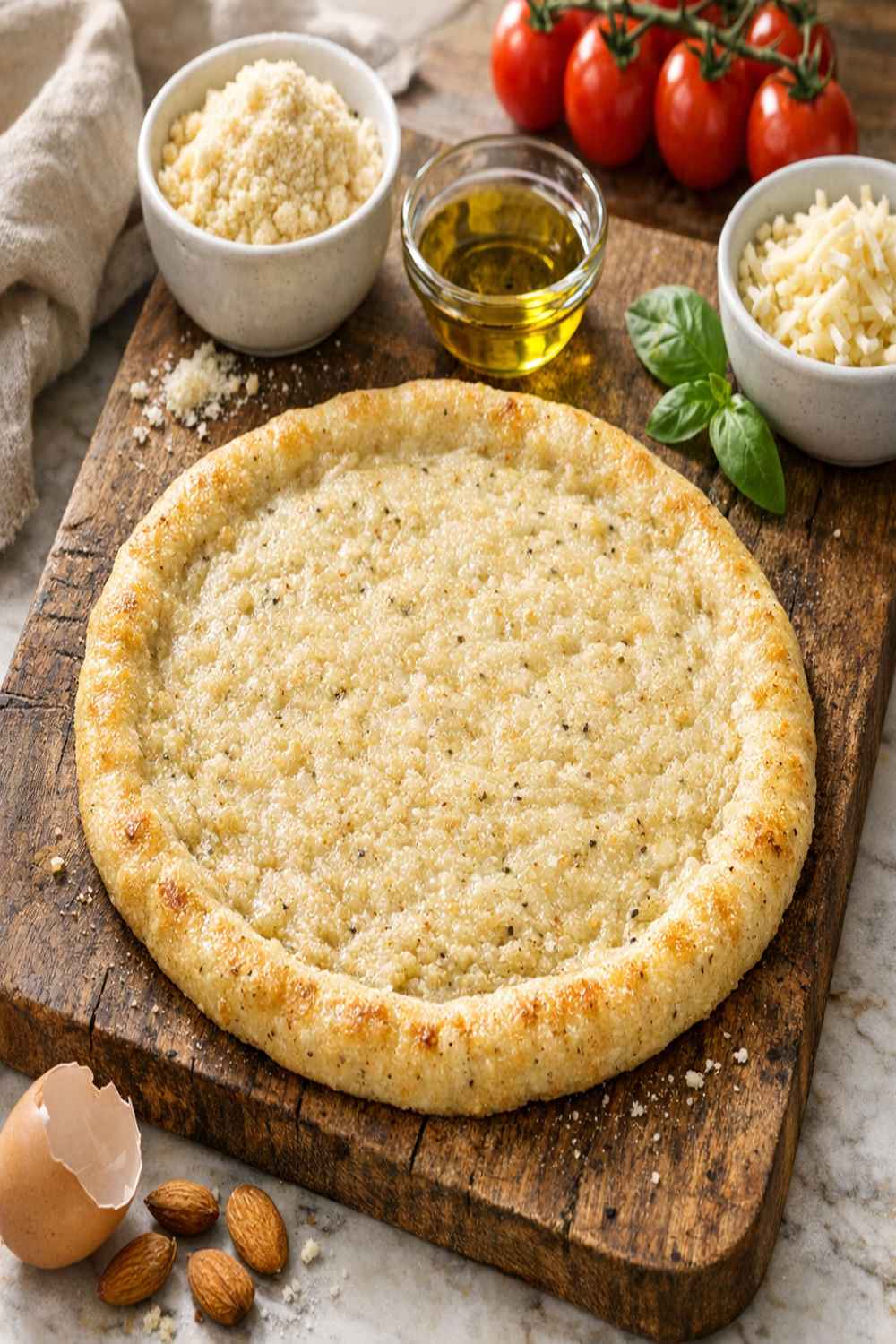

Ingredients
Method
Step 1: Preheat Your Oven and Gather Your Dry Ingredients
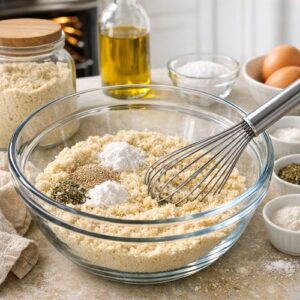
- Start by preheating your oven to 400°F (200°C). While it heats, grab a large mixing bowl and combine your almond flour, baking soda, salt, garlic powder, onion powder, Italian seasoning, and optional yeast. Whisk these together for about 30 seconds to distribute the leavening agents and spices evenly. Uneven distribution means some spots of your crust will brown faster than others, and you might get small patches with concentrated garlic or salt flavor. We want consistency throughout.
Step 2: Create a Well and Add Your Wet Ingredients
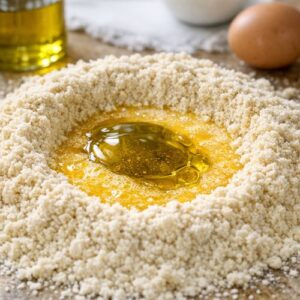
- Make a well in the center of your dry mixture—think of it like a little crater. Crack your two large eggs into a small bowl and beat them with a fork until the whites and yolks are fully combined. Pour the beaten eggs into the well, then add your ¼ cup olive oil. Don't mix yet. Let the wet and dry ingredients sit for just 30 seconds. This gives the almond flour a moment to start absorbing the moisture, which will make mixing easier and help you avoid overmixing (which can make the texture tough).
Step 3: Mix the Dough Until Just Combined
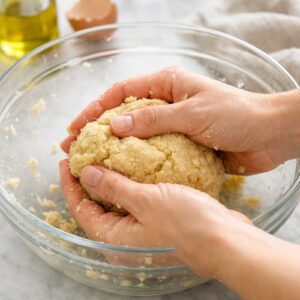
- Using a sturdy spatula, begin folding the dry ingredients into the wet mixture. You're looking for a consistency similar to cookie dough—moist, slightly sticky, but definitely holding its shape. The almond flour should be fully incorporated with no dry streaks remaining. Once the spatula gets difficult to use (because the dough is getting thick), switch to your hands. Use your fingers to gently press and fold the dough together for about 20-30 seconds. You want a cohesive ball that feels slightly sticky but doesn't stick aggressively to your fingers. If it's too wet, add 1 tablespoon more almond flour. If it's crumbly, add ½ tablespoon olive oil.
Step 4: Press and Roll Your Crust Between Parchment
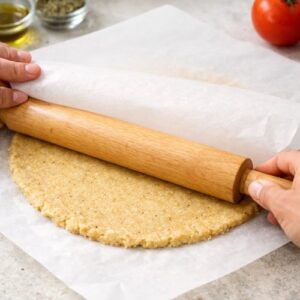
- Tear off two pieces of parchment paper, each about 12 inches long. Place one piece on your work surface, then place your dough ball in the center. Top with the second piece of parchment, pressing gently so the parchment sticks to the dough slightly. Using your hands, gently press the dough into a flat disc about ¼-inch thick. You're not trying to get it perfectly thin yet—just creating a workable base. For a thin, crispy crust, use a rolling pin to flatten the dough to about ⅛-inch thickness in a 12-inch circle. For a thicker, chewier crust, leave it at about ¼-inch thickness in a 10-inch circle. Work slowly and gently. If the dough resists rolling, let it rest for 1 minute under the parchment. This relaxes the almond flour structure and makes rolling easier without tearing.
Step 5: Transfer to Your Baking Sheet
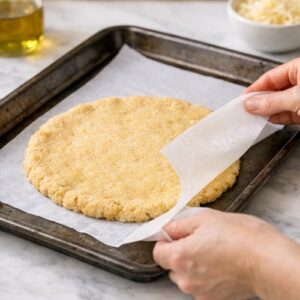
- Carefully peel away the top piece of parchment paper. Smooth the edges of your crust—they should be relatively even and attractive. Keep the bottom parchment paper on the dough. Slide the bottom parchment (with the dough still on it) directly onto your preheated baking sheet. This keeps the crust from sticking and prevents the bottom from browning too quickly. If your baking sheet is smaller than your dough circle, that's okay—a small amount can hang slightly off the edge. Just be careful when moving it into the oven.
Step 6: Prebake Until Golden and Crispy
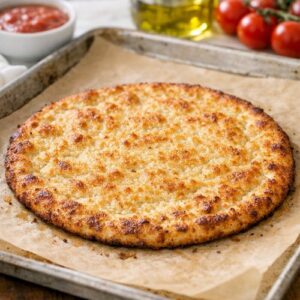
- Place the baking sheet in the center rack of your oven. Bake for 10-12 minutes, depending on thickness. You're looking for a golden-brown color on top and edges that feel firm and crispy when you gently tap them. The thicker your crust, the longer this takes—a ¼-inch crust might need the full 12 minutes, while a very thin ⅛-inch crust might be done at 10 minutes. This prebaking step is absolutely critical. It sets the structure before toppings add moisture, creating a waterproof barrier that keeps your center from getting soggy.
Step 7: Add Your Sauce and Toppings
- Remove the crust from the oven and let it cool for 1-2 minutes. Spread a thin layer of pizza sauce or unsweetened tomato passata across the crust—you want enough flavor but not so much that it pools (which adds moisture). About 3-4 tablespoons is perfect for a 12-inch crust. Remember: if you're using watery vegetables like mushrooms, zucchini, or fresh tomatoes, pre-roast them first for 8 minutes at 400°F to remove excess moisture. Dry toppings like pepperoni, cheese, and hardy vegetables can go on directly. Distribute cheese evenly—it protects the crust from direct heat and seals in the structure.

Step 8: Final Bake Until Cheese Melts
- Return the pizza to the center rack of your oven and bake for 5-8 minutes, until the cheese is melted and bubbly. Watch carefully—the edges can brown quickly, so don't step away. If you want the cheese more browned or bubbly, you can briefly broil on the top rack for 2-3 minutes, but this will significantly darken the crust edges. To prevent this, loosely tent the edges with small pieces of foil while broiling. The total time from putting the topped pizza in the oven should be around 5-8 minutes for cheese melting plus any broil time.

Step 9: Cool, Slice, and Serve
- Remove the pizza from the oven and let it rest for 2-3 minutes on the baking sheet before slicing. This cooling time allows the cheese to set slightly and makes slicing cleaner. Use a sharp pizza wheel or chef's knife to cut into 8 slices. Serve immediately while the crust is still crispy and warm. The parchment paper should peel away easily at this point. If it sticks slightly, just gently lift from one corner and peel back slowly.

Notes
- Adding wet toppings directly to the prebaked crust. Raw mushrooms, fresh tomatoes, and zucchini release significant water when heated. This moisture seeps into your crust and turns it soggy. Solution: Pre-roast watery vegetables at 400°F for 8 minutes, allowing moisture to evaporate before they touch your crust. You'll taste the difference immediately.
- Skipping the prebaking step entirely. I understand the temptation—you want to speed things up. But without prebaking, the crust doesn't set before toppings add moisture. The result is a dough that spreads, collapses, and stays doughy in the center. Prebaking takes just 10-12 minutes but makes the entire recipe work. It's not optional.
- Overmixing the dough after adding wet ingredients. Almond flour doesn't have gluten, so overmixing doesn't create toughness the way it would with wheat flour. But it does create a dense, gummy texture. Mix just until combined—you should still see slightly uneven color distribution. This takes about 45 seconds of hand-mixing, not 3 minutes.
- Using room-temperature ingredients inconsistently. Cold eggs won't bind as effectively as room-temperature eggs. If your eggs came straight from the fridge, place them in warm water for 5 minutes before cracking them. This small step makes your dough bind more effectively.
- Spreading sauce too thick. Almond flour pizza crusts are sturdier than you might think, but they're not invincible. Thick sauce adds weight and moisture. Use about 3-4 tablespoons for a full pizza, spread thin. You'll taste the crust better, and moisture won't accumulate.