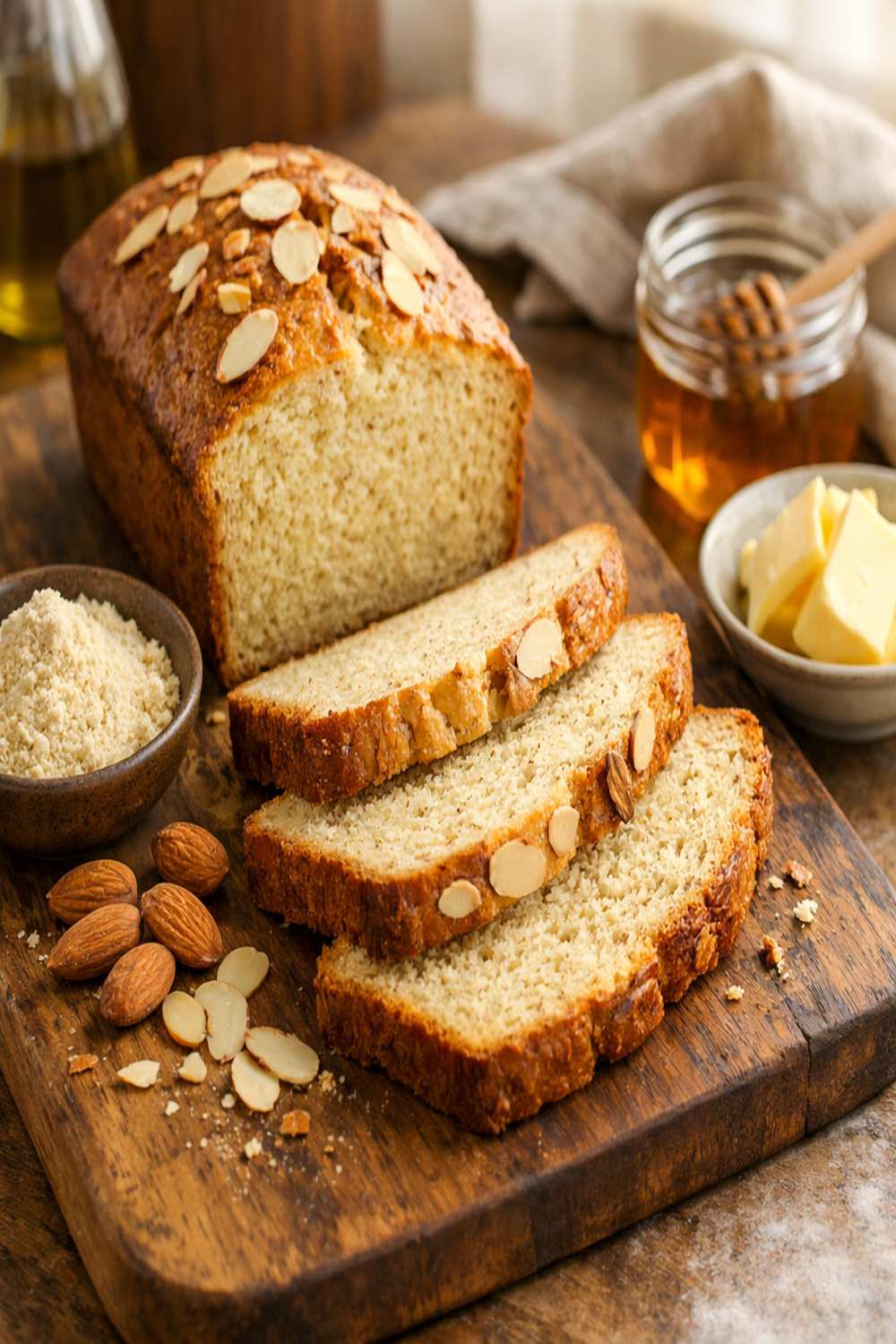

Ingredients
Method
Step 1: Preheat Your Oven and Prepare the Pan
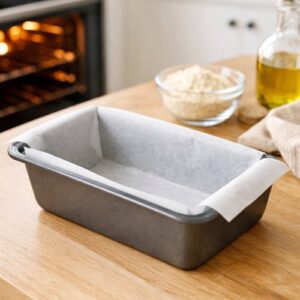
- Set your oven to 350 degrees Fahrenheit and allow it to fully preheat—this takes about 10 minutes. While it's heating, line a 9-inch loaf pan with parchment paper, allowing the paper to extend slightly above the edges so you can easily lift the bread out once it's cool. This prevents sticking and makes removal effortless, especially with this tender crumb structure.
Step 2: Beat the Eggs Until They Reach Peak Volume
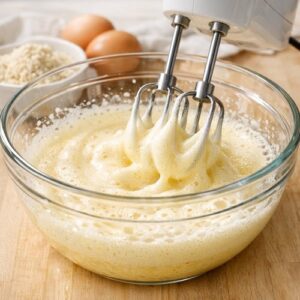
- Crack your four room-temperature eggs into a large mixing bowl. Using an electric hand mixer on high speed, beat the eggs continuously for about 4-5 minutes. You'll watch them transform from pale yellow to almost white, nearly doubling in volume. This step is non-negotiable—the air you're incorporating becomes the primary leavening agent in this bread, creating lift and a lighter crumb structure. Stop when the mixture looks thick, foamy, and ribbon-like when you lift the beaters.
Step 3: Combine All Dry Ingredients Separately
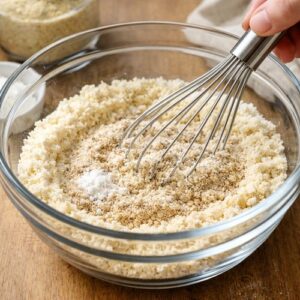
- In a second large bowl, whisk together the blanched almond flour, psyllium husk powder, baking powder, and fine sea salt. Whisking rather than simply stirring breaks up any lumps and distributes the leavening agent evenly throughout the flour mixture. This ensures consistent rise across the entire loaf rather than creating tunnels or dense pockets.
Step 4: Fold Dry Ingredients Into the Beaten Eggs
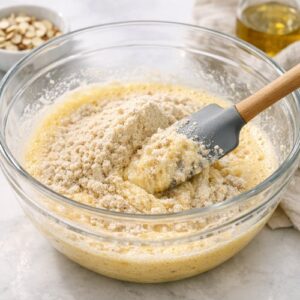
- Pour the dry ingredient mixture into the beaten eggs gradually, folding gently with a spatula rather than stirring vigorously. This preserves the air you've worked so hard to incorporate. Use about 10-12 gentle folding motions until you see no streaks of dry flour remaining. The mixture will be thick and batter-like at this point.
Step 5: Add the Fat and Binding Liquid
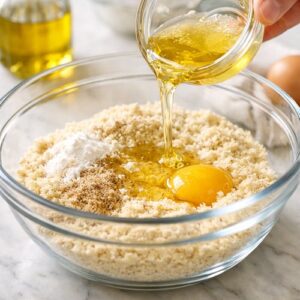
- Measure out your coconut oil while it's still solid, then gently melt it over low heat or in the microwave for about 30 seconds. Pour the warm melted coconut oil into the batter, folding gently until combined. Then add the warm water—this temperature helps activate the psyllium husk's binding and thickening properties. Fold until everything is just incorporated. The batter will be thicker than cake batter but still spreadable, with a texture somewhere between pancake batter and cookie dough.
Step 6: Transfer to the Pan and Shape the Top
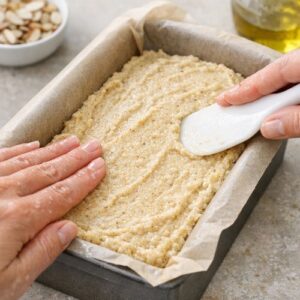
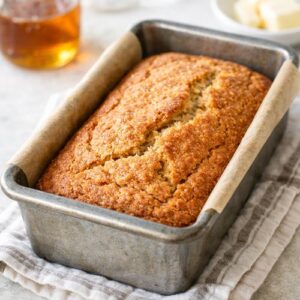
- Pour the batter into your prepared loaf pan and use a spatula or your damp hands to spread it evenly, pressing gently to remove air pockets and creating a rounded top. The top should be relatively smooth and even. This creates an even bake and that beautiful bread-like appearance when it emerges from the oven.
Step 7: Bake Until a Proper Crust Forms
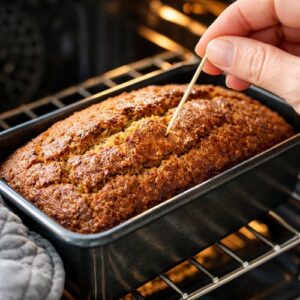
- Place the loaf in your preheated 350-degree oven for 55 to 70 minutes. Here's the critical part: a toothpick inserted into the center will come out clean around the 55-minute mark, but this is when many bakers remove it and end up with a bread that collapses or becomes dense within hours. Instead, watch for the top to develop a deep golden-brown, hard crust—similar to the crackling crust on artisan bread. The top should feel firm and slightly hollow when tapped lightly. This crust sealing is what allows the interior to maintain its tender crumb structure as it cools and sets.
Step 8: Cool Completely Before Slicing
- Remove the bread from the oven and allow it to rest in the pan for at least 15 minutes. This cooling period allows the internal structure to set properly. Then turn it out onto a wire rack and let it cool completely—about 45 minutes to an hour—before slicing. Slicing too early results in a gummy, compressed texture. I know it's tempting to cut into warm bread, but this patience step is what creates that perfect slice.
Notes
- Room Temperature Eggs Are Non-Negotiable - Cold eggs won't incorporate air effectively, resulting in a denser, flatter loaf. Remove eggs from the refrigerator 30 minutes before baking, or place them in a bowl of warm water for 5 minutes.
- Don't Skip the Psyllium Husk Powder - This is the ingredient that makes the difference between a dense almond flour cake and actual bread. Psyllium husk absorbs liquid and creates the binding structure that mimics gluten. Psyllium seed husks (the whole husks) won't work as effectively—you need the powder for this recipe.
- Measure the Almond Flour Correctly - Blanched almond flour should be spooned into your measuring cup and leveled with a knife, never packed down. Packing adds weight and creates a denser bread. One cup of properly measured blanched almond flour weighs about 112 grams if you prefer a kitchen scale.
- The Top Crust Matters More Than You Think - This bread's success depends on that hard, crusty top forming completely. If your oven runs hot, cover the top loosely with foil after 40 minutes to prevent over-browning while the interior continues cooking.
- Use a Loaf Pan, Not a Round Cake Pan - The shape matters for proper heat distribution and that traditional bread form. A 9-inch loaf pan is standard and creates the perfect bake time.
- Invest in a Good Parchment Paper - This prevents sticking and makes removal effortless. I prefer unbleached parchment paper for sustainability, but either works well.