

Ingredients
Method
Step 1: Prepare Your Workspace and Preheat
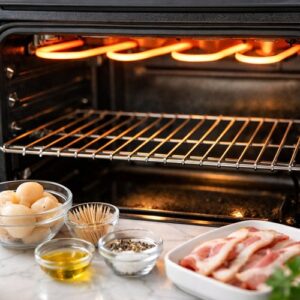
- Turn your broiler on to high and position your oven rack about 4-5 inches from the heating element. This distance matters—too close and your bacon burns while the scallop stays cold; too far and nothing crisps properly. While the broiler heats (this takes about 5 minutes), pat your scallops completely dry with paper towels. This step feels small but it's everything. Wet scallops steam instead of sear, and steamed scallops lose that beautiful golden exterior and tender interior texture that makes this dish special. Coat a rimmed sheet pan with cooking spray, making sure to get the edges and corners. If you're cooking for a crowd and using two pans, prep both now.
Step 2: Wrap the Scallops with Bacon
- Take one scallop and one piece of bacon (remember, cut each bacon slice in half crosswise, so you're working with pieces about 4 inches long). Wrap the bacon around the scallop's equator, like you're hugging it. It should overlap slightly so you can secure it. Push a toothpick through the bacon and into the scallop where the bacon overlaps—this keeps everything together during broiling. Arrange each wrapped scallop on your prepared pan with the bacon seam facing down. This keeps the seam from opening up as the bacon cooks. Leave about an inch between each piece so heat can circulate. Pro tip for make-ahead cooking: You can wrap all your scallops up to 8 hours ahead of time, cover the sheet pan loosely with plastic wrap, and refrigerate. This is perfect for parties—when guests arrive, your oven is hot and you're just 15 minutes away from serving. No last-minute wrapping stress.

Step 3: Make the Glaze
- While your scallops arrange themselves, whisk together the maple syrup, soy sauce, and garlic powder in a small bowl. That's it. Three ingredients. This is where simplicity becomes sophistication—when you trust quality ingredients to do their job without interference. The maple brings natural sweetness and body. The soy contributes saltiness, umami depth, and a slight caramel note. The garlic powder adds subtle savory backbone. Together, they create a glaze that tastes complex but couldn't be more straightforward.

Step 4: First Glaze Application
- Using a pastry brush or the back of a spoon, brush half of your glaze over the top of each scallop. Don't be shy—you want visible coverage. The glaze will caramelize in the broiler heat, creating a gorgeous mahogany crust that's both sweet and savory. Season lightly with a pinch of salt and several grinds of fresh black pepper. Remember, your bacon is already salty, so taste as you go rather than salting heavily.

Step 5: Broil with Purpose
- Slide your sheet pan under the broiler. Set a timer for 7 minutes—not more, not less. During this first stretch, the bacon begins to render its fat and crisp, and the scallop starts cooking through gently. When the timer sounds, brush the remaining glaze over each scallop. This is your secret move. The second application ensures that glaze on the surface has time to caramelize and concentrate, creating layers of flavor. Return to the broiler for another 5-8 minutes, depending on your oven's personality and the size of your scallops. You're looking for bacon that's crisp (not burnt—there's a difference) and scallops that are opaque all the way through. A scallop is done when it's no longer translucent and flakes slightly when you press it with a fork. Overcooked scallops become rubbery, so keep an eye on them during these final minutes.

Step 6: Finish with Freshness
- Remove the pan from the broiler—watch out for that handle; it's hot. Let the scallops rest for 2 minutes. This brief pause lets the residual heat finish cooking the interior while the exterior stays crisp. Sprinkle fresh chopped parsley over the top of each piece. This garnish isn't just decoration. It adds brightness, a hint of herbal freshness that cuts through the richness of bacon and glaze, and signals to your guests that this is a thoughtfully prepared dish. If you've used wooden toothpicks, you can carefully remove them now. This creates a more refined presentation, though leaving them in is perfectly fine—sometimes that casual elegance is even more charming.