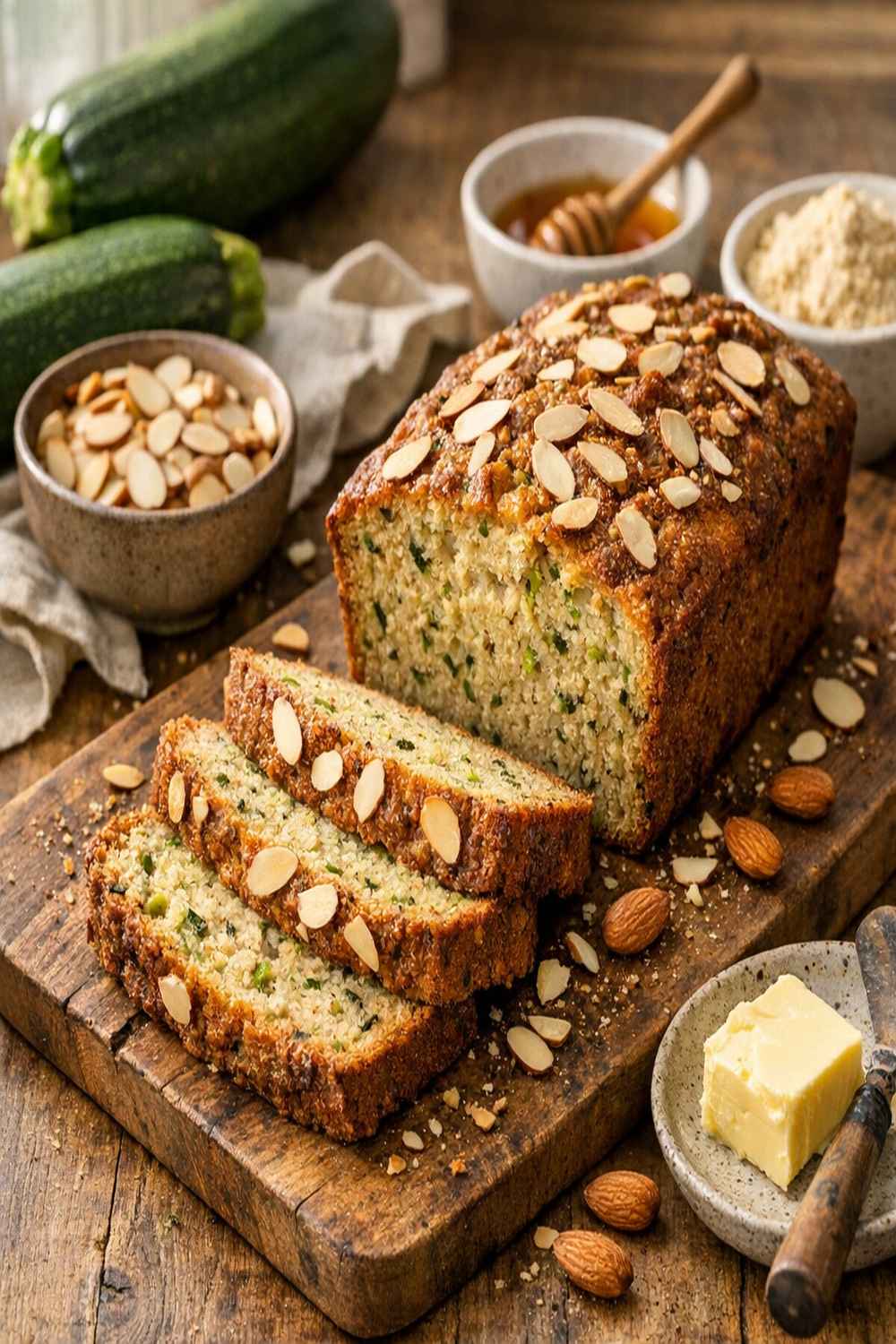

Ingredients
Method
Step 1: Prepare Your Workspace and Preheat
- Set your oven to 350°F and position the rack in the middle third of your oven (where heat circulates most evenly). While the oven heats, lightly grease a standard 9-by-5-inch loaf pan with oil or butter, then line the bottom with parchment paper. The parchment prevents sticking and makes cleanup effortless—something I always tell busy parents. This prep work should take about 3 minutes. The reason I ask you to preheat first: almond flour batter needs to hit that 350°F heat immediately. If batter sits in a cold oven, the eggs begin setting unevenly and you'll get a dense, compact crumb instead of light and tender.

Step 2: Combine All Dry Ingredients
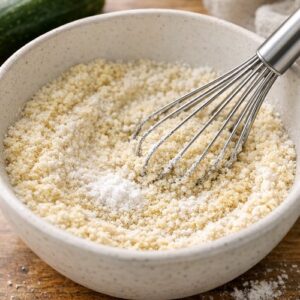
- In a medium mixing bowl, whisk together the blanched almond flour, coconut flour, baking powder, and salt. Whisk for about 30 seconds—this incorporates air and distributes the baking powder evenly throughout the flour mixture. This step is critical because baking powder clumps easily, and uneven distribution means some parts of your bread will rise more than others, creating tunneling (those large, irregular holes). A simple whisk beats an electric mixer here because overmixing dry ingredients doesn't matter; you're just breaking up clumps and incorporating air. Set this bowl aside within arm's reach of where you'll work next.
Step 3: Whisk Wet Ingredients Until Emulsified
- In a large mixing bowl, crack your 3 eggs and whisk them together for about 1 minute until the yolk and whites are completely combined and slightly frothy. This incorporates air and begins the emulsification process. Now add the brown sugar and whisk for another 1-2 minutes until the mixture becomes pale and noticeably thicker—this is crucial. You're dissolving sugar crystals and creating a stable emulsion that will hold oil and water together (remember, eggs contain both water and fat, so they're natural emulsifiers). Add the neutral oil in a slow, steady stream while whisking constantly. This slow incorporation prevents the batter from "breaking" (separating into greasy puddles). Finally, whisk in the vanilla extract and lemon zest. At this point, your wet ingredients should be thick, pale, and completely smooth—about 3 minutes of total whisking.

Step 4: Fold in Shredded Zucchini
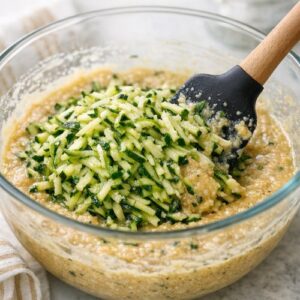
- Add the shredded zucchini to your wet mixture and use a rubber spatula to gently fold it in with about 6-8 folds until evenly distributed. Don't overstir—you're not developing gluten (you don't have any), but vigorous mixing can deflate the air bubbles you just incorporated. The zucchini will feel quite wet, and that's exactly right. This should take about 30 seconds. At this point, your batter smells incredible—that's the vanilla and lemon zest interacting with the almond flour's natural sweetness.
Step 5: Combine Wet and Dry Ingredients
- Pour the wet mixture over your dry ingredients and use your spatula to fold them together with gentle, deliberate motions. Fold from the bottom of the bowl up and over, rotating the bowl slightly with each fold. Continue for about 12-15 folds until the dry ingredients are completely incorporated and you don't see any flour streaks. The batter will be thick—thicker than traditional wheat-based zucchini bread—but it should fall off the spatula when you lift it. This is the moment where patience matters: overmixing activates gluten in the almond flour's trace proteins and can create a tough, dense loaf. You're aiming for "just barely combined," not smooth and fully incorporated.

Step 6: Fold in Chocolate Chips
- If using chocolate chips, gently fold them in with 2-3 final folds. The chips will settle slightly as the batter bakes, so don't worry about perfect distribution. This takes about 10 seconds. If you're skipping the chocolate, that's fine—this bread is delicious on its own.

Step 7: Transfer to Pan and Bake
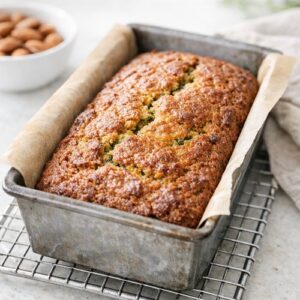
- Pour the batter into your prepared loaf pan and use your spatula to gently smooth the top. You want the surface relatively level so the bread bakes evenly. Place the pan in your 350°F oven and set a timer for 45 minutes. At 45 minutes, insert a wooden skewer or toothpick into the center of the loaf. It should come out clean or with just a few moist crumbs clinging to it—not wet batter, but also not completely dry. If it feels too wet, return it to the oven for 3-5 more minutes and check again. Almond flour breads are moister than wheat breads, so don't panic if it looks slightly underbaked compared to traditional zucchini bread. The carryover cooking (residual heat) will continue as it cools.

Step 8: Cool Completely Before Slicing
- Remove the bread from the oven and let it cool in the pan for 10-15 minutes. This resting period allows the crumb to set completely. If you slice it while it's still hot, the structure is delicate and you'll get compressed, messy slices. After 15 minutes, turn the loaf out onto a wire cooling rack and let it cool completely—about 1 hour—before slicing. The wait feels eternal, I know, but this resting time is where the magic happens. As the bread cools to room temperature, the starches gelatinize and the texture firms up into that beautiful, slightly moist but tender crumb you're after. Room-temperature bread also develops fuller flavor—the aromatic compounds are most prominent when the food is no longer piping hot.
Notes
- Squeeze your zucchini dry before measuring - place shredded zucchini in a clean kitchen towel and squeeze firmly over the sink. Excess moisture is the #1 reason almond flour zucchini bread turns out dense. Even though we want *some* moisture, too much prevents proper structure development. You should remove about 2-3 tablespoons of liquid per cup of zucchini.
- Room-temperature eggs are non-negotiable - cold eggs don't emulsify properly, and you'll end up with a separated, greasy batter. Take them out of the fridge 20 minutes before baking. This small step prevents more baking disasters than anything else I teach.
- Use aluminum-free baking powder - standard baking powder contains aluminum, which some people want to avoid. Aluminum-free varieties work identically but won't leave any metallic aftertaste, especially noticeable in grain-free baking where almond flour already has a delicate, nutty flavor.
- Don't skip the lemon zest - I added this to the original recipe because almond flour can taste slightly heavy or earthy to some palates. Lemon zest adds brightness without adding liquid, and it's especially important if you're using chocolate chips, where the acid balances the richness.
- Invest in a loaf pan thermometer - ovens vary wildly in actual temperature versus what the dial says. A $12 oven thermometer tells you exactly what temperature you're really baking at. This single tool has probably prevented more failures than every other tip combined.